This week has seen a flurry of activity in the artificial intelligence sector, with key players unveiling groundbreaking strategies and technologies. OpenAI has taken a bold step by proposing an action plan for the U.S. government to enhance its AI capabilities across various sectors.
The company's recommendations emphasize the need for policies that promote freedom in AI development while safeguarding intellectual property rights. These proposals aim to ensure the U.S. remains at the forefront of AI innovation amidst global competition. Furthermore, they highlight the importance of balancing regulatory oversight with the freedom to innovate, ensuring the industry can thrive without unnecessary constraints.
In another significant development, Deloitte introduced Zora AI, a cutting-edge platform designed to revolutionize business operations through autonomous digital agents. This advanced system leverages Nvidia's AI technology to deliver solutions tailored for industries such as finance, supply chain management, and customer service. Zora AI exemplifies how agentic reasoning capabilities can augment human workforces, optimizing efficiency and productivity.
Beyond corporate advancements, Google Cloud expanded its offerings with the launch of Chirp 3, a sophisticated voice model capable of producing natural-sounding speech in multiple languages. By integrating this technology into their Vertex AI platform, developers gain access to tools that enable the creation of immersive applications like virtual assistants and audiobooks. Additionally, ethical considerations remain paramount, as demonstrated by Google's approach to restricting certain functionalities to prevent misuse.
As AI continues to reshape managerial roles, Capgemini's research underscores the importance of embracing generative AI as a collaborative tool. Their findings reveal that only a fraction of managers actively integrate these technologies into their daily routines. Through their publication with Harvard Business Review, experts Elisa Farri and Gabriele Rosani provide valuable insights on fostering effective co-thinking practices between humans and machines. Such partnerships not only enhance decision-making but also mitigate risks associated with rapid technological adoption.
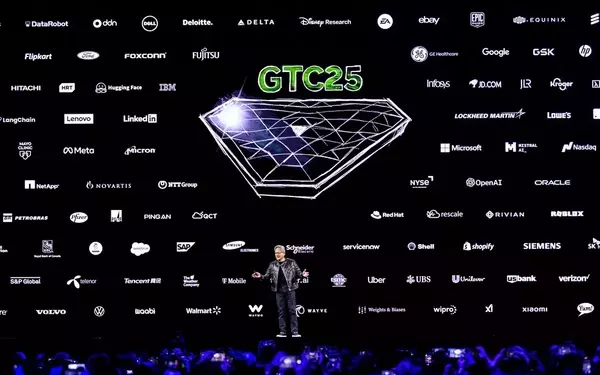
Nvidia further solidified its leadership in the AI landscape by unveiling new networking solutions designed to support large-scale GPU infrastructures. The Spectrum-X and Quantum-X silicon photonics switches promise to redefine data movement within AI supercomputers, addressing existing bottlenecks and improving energy efficiency. As AI models grow increasingly complex, these innovations pave the way for more robust and scalable computing environments.
These developments collectively underscore the transformative potential of artificial intelligence across diverse domains. By fostering collaboration between human expertise and machine capabilities, we unlock unprecedented opportunities for growth and innovation. Embracing responsible AI practices ensures that technological progress aligns with societal values, promoting equitable access and sustainable development for future generations.