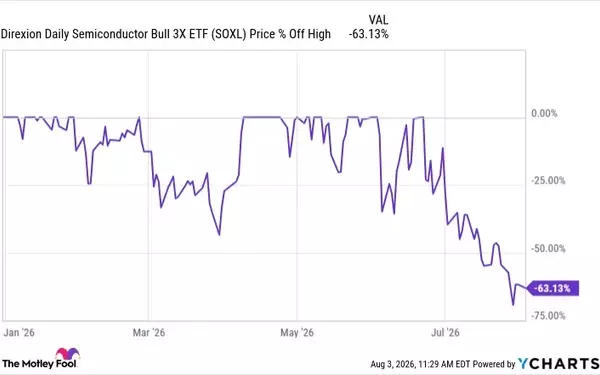
The artificial intelligence (AI) boom, characterized by substantial corporate spending and heavy borrowing, is raising concerns within the financial sector. While AI-related investments are noted to contribute significantly to economic growth, there's a growing apprehension about the sustainability of these expenditures. A recent report highlights that an overwhelming amount of corporate debt is being issued to finance AI infrastructure, which could lead to instability if the anticipated returns from AI technologies fail to materialize. This potential downturn is particularly worrisome for bond investors, especially those holding high-yield corporate bonds.
Specifically, the market for speculative-grade debt, often referred to as "junk bonds," faces increased vulnerability. These bonds are issued by companies with lower credit ratings, requiring them to offer higher interest rates to attract investors. While such bonds have historically provided attractive returns, a broad market correction or an economic slowdown driven by an underperforming AI sector could expose these investments to significant risk. Therefore, a careful assessment of the current AI investment landscape and its implications for corporate credit is crucial for investors navigating the volatile bond market.
The Dual Edge of AI Investment: Growth Versus Risk
The burgeoning field of artificial intelligence has been a primary driver of market excitement since late 2022, witnessing widespread adoption and massive capital allocation from leading technology firms. Corporations are pouring hundreds of billions into data centers, specialized semiconductors, and digital ecosystems to develop AI capabilities. However, a significant portion of this ambitious expansion is financed through debt. Financial analysis suggests that corporate borrowing linked to AI initiatives could approach nearly $570 billion by 2026. While one rating agency reported a positive impact on U.S. GDP growth from these investments, it also cautioned about the inherent uncertainties surrounding the long-term profitability and technological efficacy of AI.
This reliance on debt for potentially uncertain returns presents a considerable hazard to the credit market. Should the widespread optimism surrounding AI prove unfounded, leading to a "re-evaluation of long-run returns potential," the implications for corporate bondholders could be severe. A scenario where tech giants struggle to generate adequate revenue from their massive AI investments would not only impact their stock performance but also undermine their ability to service debt, consequently harming bond investors. This risk extends particularly to less creditworthy issuers, whose high-yield bonds are more susceptible to market downturns.
High-Yield Bonds Under Scrutiny: The Case of JNK
Amidst the debate on AI's financial viability, particular attention is drawn to the high-yield corporate bond market, exemplified by exchange-traded funds like the State Street SPDR Bloomberg High Yield Bond ETF (JNK). This ETF comprises a diverse collection of over a thousand U.S. corporate bonds, all rated below investment grade, signifying a higher risk profile. Issuers of these bonds compensate for their lower credit standing by offering more attractive interest rates to investors. Over recent years, JNK has demonstrated robust performance, even surpassing some investment-grade bond funds, with notable annualized returns.
However, the influx of AI-related corporate debt, coupled with the potential for fluctuating interest rates, casts a shadow over these past successes. Despite JNK's broad diversification across various economic sectors, a significant slump in the AI-driven tech industry could precipitate a wider economic slowdown and a sell-off in corporate bonds. Such an event would disproportionately affect companies with junk ratings, making it harder for them to meet their debt obligations. Consequently, investors in high-yield bond funds are urged to exercise heightened caution, as the current market conditions suggest an elevated risk profile that may not be fully reflected in historical performance.