Amir Taghi's latest collection for Spring 2027 is a poignant reflection of his bicultural identity, seamlessly weaving together the rich tapestry of his Iranian roots with the sophisticated allure of his Texan upbringing. His design philosophy is deeply personal, driven by a desire to honor his heritage while navigating the complexities of global perception. The collection emerges as a thoughtful dialogue between these two worlds, transforming cherished memories and ancestral motifs into contemporary fashion statements. Through his innovative approach, Taghi not only presents a stunning array of garments but also embarks on a mission to reframe narratives, using the universal language of style to foster understanding and appreciation for his culture, especially in light of recent global events.
Taghi's distinctive business model, heavily reliant on direct sales through trunk shows, highlights a strategic and intimate connection with his clientele. This approach allows him to gain direct insights into consumer preferences, which in turn informs and refines his creative process, ensuring his designs resonate deeply with his audience. In an industry increasingly marked by volatile wholesale markets, this direct-to-consumer strategy provides a robust foundation for organic brand growth. Furthermore, this season marks a subtle yet significant evolution in his aesthetic, with the introduction of intentionally unfinished hems. This stylistic choice, a deliberate departure from his brand's hallmark precision, serves as a quiet acknowledgment of the prevailing global climate, infusing his meticulous designs with a touch of raw, contemporary sensibility.
Cultural Tapestry in Textile
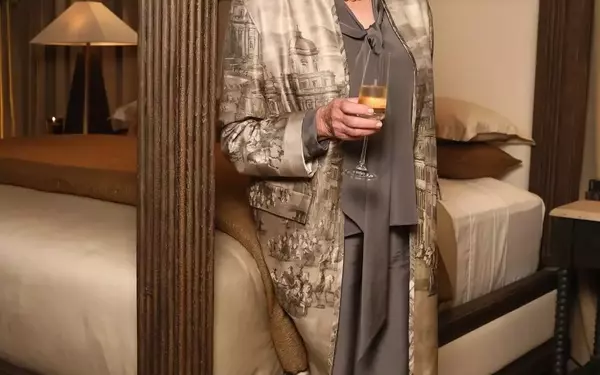
Amir Taghi's Spring 2027 collection is a vivid embodiment of his dual heritage, skillfully intertwining the intricate beauty of Persian culture with the refined elegance of Texan society. His personal journey, shaped by his family's emigration in the 1980s, deeply informs his artistic vision, allowing him to create garments that are both deeply meaningful and precisely crafted. The collection showcases an array of innovative designs, including skirts and dresses adorned with prints inspired by the nostalgic wallpapers from his childhood visits and the vibrant flowers found in his grandfather's Fasham garden. The architectural lines of his grandmother's residence are subtly referenced in the elegant necklines of embellished dresses, while the reverse side of ancient Qashqai kilim rugs owned by his grandfather transforms into striking printed jackets and beaded tops and skirts. A military jacket, reimagined from the historical Qajar Court attire, features earthy turquoise stones instead of traditional precious gems, symbolizing a modern interpretation of ancient grandeur.
The collection draws heavily from Taghi's personal history, transforming cherished memories into wearable art. Each piece tells a story, from the flowing silhouettes that evoke the serenity of Persian landscapes to the structured forms that hint at Southern grace. The use of patterns derived from his family's heirlooms and the incorporation of traditional motifs, reinterpreted with a modern flair, demonstrate a profound respect for his cultural lineage. This fusion of influences not only defines the collection's unique aesthetic but also underscores Taghi's commitment to presenting a nuanced portrayal of his background. Through these designs, he seeks to bridge cultural divides, offering a tangible connection to Iranian artistry and heritage, and inviting a broader audience to appreciate the depth and beauty of a culture often misunderstood.
Fashion as a Cultural Bridge
The recent global turmoil has imbued Amir Taghi's work with a profound sense of purpose, intensifying his commitment to using fashion as a medium for cultural advocacy. He articulates a deep concern for the potential destruction of cultural heritage amidst conflict and a pressing desire to counteract misconceptions about his Iranian background. Taghi views his designs not merely as clothing but as powerful narratives, aiming to humanize his culture for Western audiences who might primarily associate Iran with its government rather than its people. His collections become a vibrant platform to showcase the richness, complexity, and beauty of Iranian identity, challenging preconceived notions and fostering a more empathetic understanding of its people. This mission elevates his craft beyond mere aesthetics, transforming it into a vital act of cultural diplomacy and storytelling.
Taghi's strategic business model, which sees approximately 90 percent of his revenue generated from trunk shows across major American cities like Houston, Palm Beach, Aspen, Dallas, and Nashville, plays a crucial role in his cultural mission. This direct engagement allows him to personally connect with his clientele, explaining the narratives and inspirations behind each garment. Such direct interaction not only provides invaluable feedback for refining his designs but also serves as an intimate educational experience for his customers. In a competitive wholesale market, this personalized selling approach has proven to be an effective strategy for brand development, enabling Taghi to build his brand incrementally and authentically. Furthermore, his subtle experimentation with design elements, such as undone hems, signifies a nuanced response to contemporary realities, acknowledging the ongoing need for both beauty and reflection in a world marked by change and uncertainty.