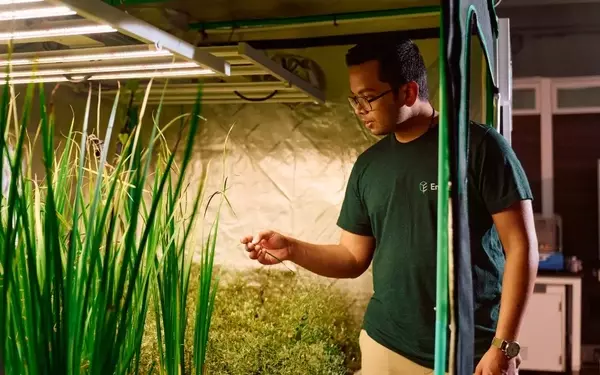
Anthropic has recently disclosed a significant breakthrough from its biological research facility in the Bay Area, which utilizes artificial intelligence to conduct laboratory experiments. The AI company announced the discovery of a novel enzyme system with characteristics similar to CRISPR, capable of DNA manipulation.
This pioneering enzyme system, identified in the genetic material of bacteriophages, has the capacity to perform genetic operations such as cutting, copying, and pasting DNA sequences. Although Anthropic CEO Dario Amodei noted the discovery builds upon prior research, including work from Stanford University, he emphasized that their AI model, Claude, was instrumental in this finding, accomplishing the feat in a mere 21 hours of focused effort.
This achievement comes at a time when AI industry leaders, including Amodei, have voiced concerns about the potential dangers of increasingly powerful AI models, advocating for a cautious approach and robust safety protocols. Despite these concerns, Anthropic is clearly committed to advancing AI in biological research, believing the potential benefits, such as curing diseases, outweigh the inherent risks. It is crucial to note that all physical experiments within Anthropic's lab, which operates at lower biosafety levels (BSL-1 and BSL-2) and does not handle human pathogens, are currently performed by human scientists. While fully automated labs remain a future possibility, human oversight remains paramount in current operations, aligning with the broader scientific community's exploration of AI in biology, as evidenced by similar research at Stanford and UC San Francisco, and Google's AlphaFold.
The integration of artificial intelligence into biological discovery holds immense promise for accelerating scientific progress and addressing complex challenges. By augmenting human ingenuity with AI's analytical power, we can unlock new insights and solutions that were previously unattainable. This synergy underscores the importance of responsible innovation, where advanced technology is developed and deployed with careful consideration for safety and ethical implications, ultimately striving for a future where humanity and technology thrive together.