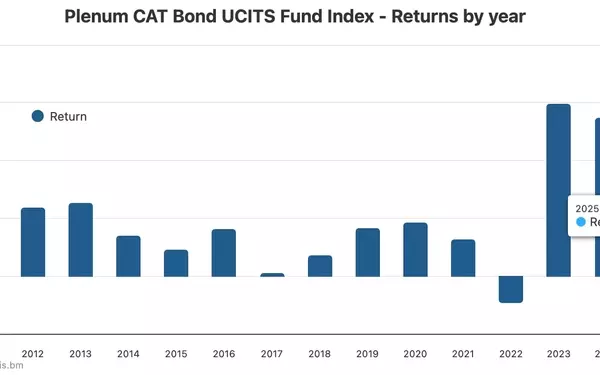
The catastrophe bond sector has recently observed a notable surge in overall yields, surpassing the 11% threshold for the first time since October 2024. This significant development, highlighted by Plenum Investments, indicates a dynamic shift within the market. However, with the onset of the hurricane season, it's anticipated that the discount margin will experience a subsequent reduction.
By mid-June 2025, catastrophe bond market yields reached an impressive 11.12%, settling slightly to 11.03% by the month's close on June 27th. This figure represents a considerable change from the previous year, with the current overall yield sitting approximately 19% lower than the 13.69% recorded on June 28th, 2024. This decline is attributed to a combination of softer pricing conditions and diminished risk-free collateral returns within the market.
Further analysis reveals that both the insurance risk spread, also known as the discount margin, and the collateral yield have decreased over the past year. A year ago, the insurance risk spread was as high as 8.33%, complemented by a collateral yield of 5.36%. In contrast, as of June 27th, 2025, these figures stood at 6.73% for the risk spread and 4.3% for the collateral yield, respectively.
Looking ahead, Plenum Investments projects that the typical seasonal patterns associated with the Atlantic hurricane season will lead to a compression of insurance risk spreads, thereby lowering the discount margin. This anticipated market adjustment is a standard occurrence during this period, as the increased frequency of severe weather events influences investor behavior and pricing.
Despite the year-on-year decrease in the overall catastrophe bond market yield, the risk spreads remain attractive to investors. Moreover, the expected loss for the catastrophe bond market is only marginally higher than previous periods and remains below the levels observed in early 2023, underscoring the market's underlying resilience and continued appeal.
Market participants should closely monitor these trends, as the interplay between yield fluctuations and seasonal weather patterns will continue to shape the catastrophe bond landscape. The current environment, characterized by robust yields and evolving risk dynamics, presents both challenges and opportunities for those engaged in the insurance-linked securities space.