The Chicago City Council has narrowly approved a contentious $830 million infrastructure bond plan, championed by Mayor Brandon Johnson. Despite opposition concerns about financial irresponsibility, supporters argue that the bond is essential for critical city improvements. The debate was intense, with accusations of political posturing and concerns over long-term debt impacts. The revised plan includes safeguards to ensure funds are used exclusively for infrastructure projects.
Intense Debate Over Financial Responsibility
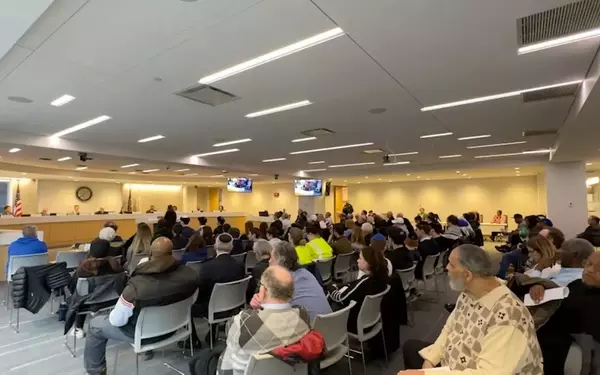
The approval of the bond plan came after a heated discussion where critics and supporters clashed over its implications. Opponents argued that the large sum and delayed repayment schedule could jeopardize the city's financial stability. Supporters, however, maintained that investing in infrastructure now would prevent higher costs in the future due to deferred maintenance.
Opposition voices like Alderman Bill Conway likened the plan to "kicking the can into a brick wall," emphasizing concerns about saddling future generations with unsustainable debt. On the other hand, Finance Committee Chair Pat Dowell defended the proposal as responsible and necessary. She pointed out that failing to invest in infrastructure would lead to deteriorating roads, bridges, and public buildings, ultimately costing more in the long run. The revised plan included clear guidelines ensuring the funds would be used solely for infrastructure upgrades and repairs, addressing some of the opponents' concerns.
Details and Allocation of the Bond Funds
Despite the controversy, the council voted 26 to 23 in favor of the bond plan, which will fund various infrastructure projects across the city. The funds will be allocated to address immediate needs such as road repairs, bridge replacements, and safety improvements at high-risk intersections. Additionally, significant investments will be made in modernizing city buildings and upgrading public safety equipment.
Approximately $108 million will go toward "menu" projects chosen by individual aldermen, while $99 million will be dedicated to bridge repairs. Up to $157.5 million will enhance streetscapes and improve safety at intersections prone to accidents. Another $74 million will update city buildings, including firehouses and structures damaged by fire. The plan also allocates $65 million for replacing city vehicles, installing speed cameras, and providing new gear to firefighters. Furthermore, $100 million will be used to replace lead service lines, and $102 million will resurface residential and arterial streets, creating 50 "green" alleys to mitigate flooding issues. Vice Mayor Walter Burnett highlighted that deferring these maintenance tasks would only increase future costs, making the bond a prudent investment in the city's quality of life.