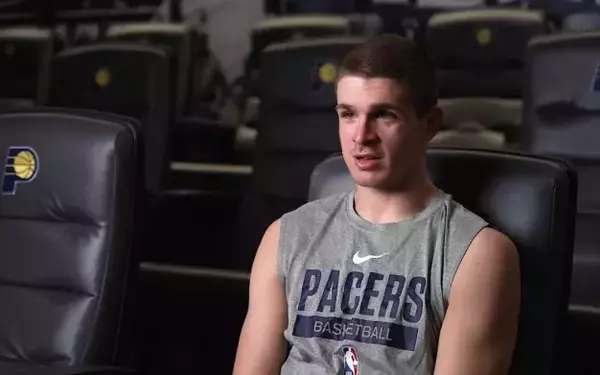
The Los Angeles Clippers have officially parted ways with forward Patrick Baldwin Jr. This organizational decision, which had been widely anticipated, facilitates the team's ability to sign Jordan Miller to a two-way contract. Baldwin Jr.'s journey in the league has been marked by several team changes and limited court appearances, underscoring the competitive landscape and fluid nature of player rosters in professional basketball.
Baldwin Jr. entered the NBA as the 28th overall pick in the 2022 draft. His initial stint was with the Golden State Warriors, where his rookie season saw minimal action. Subsequently, he was part of a significant trade that involved prominent players like Jordan Poole and Chris Paul, leading him to the Washington Wizards. Despite spending two partial seasons there, his role remained limited. His travels continued to the San Antonio Spurs, who released him shortly after his arrival, before he concluded the 2024-25 season on a two-way agreement with the Clippers. While his NBA statistics—averaging 3.7 points and 2.0 rebounds in under nine minutes per game over 93 contests—reflect a modest contribution, his performance in the G-League, particularly during the 2024-25 season, showcased a more impactful presence with averages of 17.3 points and 6.8 rebounds across 23 games for the Capital City Go-Go and San Diego Clippers.
This strategic roster adjustment by the Clippers is a typical maneuver in the NBA, as teams continuously refine their lineups to maximize talent and fit. Baldwin Jr. still retains eligibility for a two-way contract for another year, offering him future opportunities in the league. His departure allows the Clippers to integrate Jordan Miller, who will occupy the third and final two-way roster slot, joining Kobe Sanders and Trentyn Flowers. This move highlights the constant evolution of NBA rosters, where player development and team strategy are meticulously balanced to build competitive teams, often requiring difficult decisions about individual players to achieve collective goals.