As the catastrophe bond market experiences remarkable growth, the next phase of its evolution will transcend mere standardization. Tanja Wrosch, the Head of Cat Bond Portfolio Management at Twelve Securis, emphasizes that embracing digitization and streamlining data and deal flow will be paramount. This strategic shift is essential to effectively manage the market's expanding scale while safeguarding the crucial flexibility that sponsors require. Twelve Securis, established earlier this year through the merger of Twelve Capital and Securis Investment Partners, specializes in ILS, encompassing both public and bespoke private transactions, with strategies ranging from liquid UCITS-style funds to customized institutional mandates.
In response to the rapid expansion of the catastrophe bond market, Wrosch identifies that strong demand currently exists, with ample capacity to absorb new issuances. She notes that increased market activity and liquidity are paving the way for the market's growth in both size and relevance. While acknowledging the utility of standardization, Wrosch underscores its limitations, particularly concerning sponsors' need for tailored deals. She advocates for deeper digitization, suggesting that enhancing data flow and transaction lifecycle processes can significantly boost efficiency. For investors, Wrosch stresses the importance of sophisticated risk management, typically offered by larger managers with institutional-grade setups that leverage multi-model frameworks, continuous model validation, and the latest academic research. As market activity intensifies, scalability becomes critical, necessitating robust operational capacity and unwavering discipline from managers. Furthermore, the value of independent managers, who prioritize investor performance and client service, is highlighted for their ability to deliver consistent returns without potential conflicts of interest arising from underwriting risk.
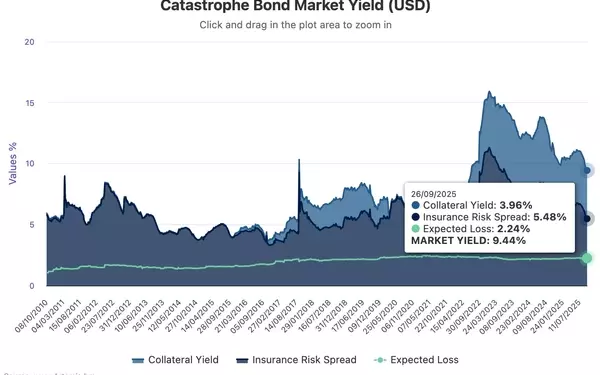
Looking ahead, Wrosch points out key challenges facing the global ILS market, including the need for discipline amidst record cat bond issuance and the complexities of regulatory clarity, especially concerning ESMA's UCITS guidance. She also cautions against the volatility that short-term investors, drawn by high yields and perceived non-correlation, might introduce, which could lead to imbalances if broader markets stabilize or other yields rise. Despite these challenges, Wrosch affirms the market's robust health, driven by record annual issuance and an influx of new cedents. Investor sentiment remains positive due to solid yields and persistent low correlation, though outsized returns like those in 2023 are not expected. As the year draws to a close and with an eye on the January renewals, Wrosch anticipates potential spread tightening if catastrophe losses remain low but stresses the importance of maintaining discipline on key contract terms. Cat bond spreads continue to outperform comparable high-yield corporates, offering a compelling value proposition as fixed-income diversifiers with low correlation to financial markets, further enhanced by their floating-rate nature which provides protection against falling interest rates.