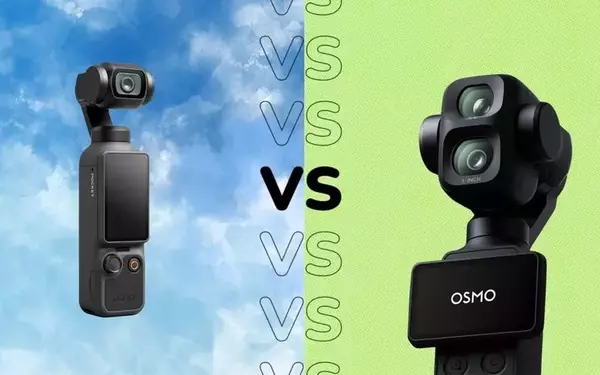
In the evolving landscape of portable camera technology, two new contenders have emerged, each vying for supremacy in the dual-lens gimbal camera market. DJI's Osmo Pocket 4P and Insta360's Luna Ultra both offer innovative features and impressive specifications, making the choice between them a significant decision for enthusiasts and professionals alike. This analysis delves into their core attributes, offering an initial comparative overview to guide potential consumers.
Detailed Analysis of the Latest Gimbal Cameras
Unveiled in Beijing, the DJI Osmo Pocket 4P is now available for purchase, with an introductory price of £529 / €599. Similarly, the Insta360 Luna Ultra has entered the market, priced at £649/$769.99 for its standard package. Both models provide various bundle options with accessories, mirroring the strategy of their predecessors. A standout commonality between these devices, and a key differentiator from earlier models like the Pocket 4 or Go Ultra, is their dual-lens configuration, featuring both a primary and a telephoto lens. While both integrate dual lenses, their exact specifications vary. For instance, the Luna Ultra's telephoto lens boasts an f/2.0 aperture, whereas the Pocket 4P's counterpart offers a wider f/1.8 aperture. DJI highlights that the Pocket 4P's one-inch CMOS sensor delivers an exceptional 17 stops of ultra-high dynamic range, introducing a 10-bit D-Log 2 professional color mode that promises extensive post-production flexibility. In contrast, the Luna Ultra provides 14 stops of dynamic range, akin to the Osmo Pocket 4. Theoretically, the Pocket 4P's superior dynamic range should enable better performance in challenging lighting conditions. However, the Luna Ultra distinguishes itself with its one-inch Leica lens, capable of capturing breathtaking 8K cinematic footage at up to 30 frames per second (fps). For higher frame rates, it supports 4K recording at up to 120fps. The Osmo Pocket 4P, on the other hand, excels in slow-motion capture, offering 4K at 240fps, a feature highly praised in its predecessor, the Pocket 4, for its stability, smoothness, and rich color reproduction. The Luna Ultra's slow-motion capabilities are limited to 1080p at 240fps, which, while decent, falls short of its competitor's 4K offering. These detailed comparisons underscore the distinct advantages each camera brings to the table, catering to different user priorities.
Considering the detailed features, the DJI Osmo Pocket 4P appears to be a strong contender for those prioritizing high dynamic range and superior slow-motion video capabilities, making it ideal for capturing intricate details in dynamic scenes. Conversely, the Insta360 Luna Ultra's ability to record in stunning 8K resolution makes it an attractive option for videographers seeking the highest possible clarity and future-proofing their content. The choice ultimately depends on specific creative needs and budget, highlighting the importance of evaluating these advanced devices based on individual project requirements.