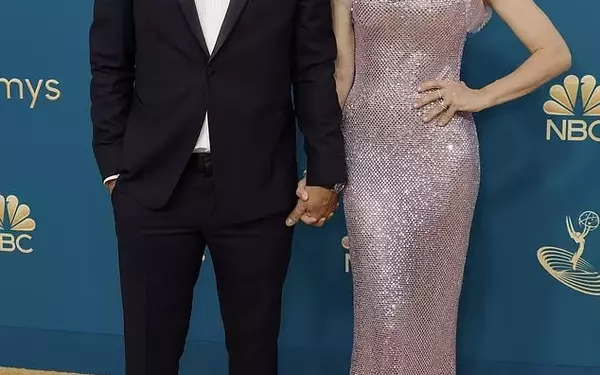
The 78th Primetime Emmy Awards, despite featuring a notable celebrity appearance by Taylor Swift and hosted by Mariska Hargitay, saw a significant dip in its broadcast viewership this year. The event, held at the Peacock Theatre in Los Angeles, attracted approximately 6.7 million viewers, marking a nearly 10 percent decrease from the previous year's figures. This decline is part of a broader trend affecting award shows, with discussions indicating a potential shift in broadcast rights to Amazon Prime Video in the coming years. Social media engagement, however, painted a brighter picture, with NBCUniversal reporting over 133 million interactions across various platforms, a substantial increase from the prior year.
This year's ceremony, moved to a Monday evening to avoid conflict with NBC's Sunday Night Football schedule, still found itself in direct competition with the opening broadcast of Monday Night Football, featuring a high-profile game between the Denver Broncos and Kansas City Chiefs. The Emmys' struggle to maintain high ratings is a long-standing issue, with viewership steadily declining over the past two decades amidst the proliferation of streaming services and diverse entertainment options. While social media metrics show strong engagement, translating this into live broadcast numbers remains a challenge for traditional award shows in the evolving media landscape. The ceremony celebrated Apple TV's 'Widow's Bay' as a major winner, securing 14 awards, and 'The Pitt' for best drama.
Declining Viewership for Prestigious Award Show
The 78th Primetime Emmy Awards experienced a notable drop in its live broadcast audience on NBC, underscoring a persistent challenge faced by major award ceremonies in today's fragmented media environment. Despite strategic programming decisions, including a Monday evening slot and a special cameo from pop superstar Taylor Swift, the event's traditional television appeal continued to wane. This trend highlights a broader shift in consumer behavior, with audiences increasingly opting for on-demand content and digital platforms over linear television, making it difficult for even high-profile events to secure large, consistent viewership figures. The reported 6.7 million viewers represent a significant decrease from past broadcasts, prompting industry speculation about the future of such events on traditional networks.
The decreasing ratings for the Emmys are a microcosm of a larger industry trend where live television events, particularly award shows, struggle to capture the massive audiences they once did. Factors such as the rise of streaming services, varied entertainment options, and direct competition from major sporting events like the NFL's Monday Night Football contribute to this decline. Historically, the Emmys commanded viewership in the tens of millions, with figures exceeding 21 million in the year 2000. However, the last time the broadcast surpassed 10 million viewers was in 2018, illustrating a consistent downward trajectory. This ongoing challenge is now pushing broadcasters and organizers to re-evaluate their strategies, with potential shifts towards digital-first distribution, as exemplified by ongoing negotiations with streaming giants like Amazon Prime Video.
Social Media Engagement vs. Broadcast Numbers
While traditional broadcast numbers for the 78th Primetime Emmy Awards showed a decline, the event demonstrated a robust performance on social media platforms. NBCUniversal reported an impressive 133 million interactions across various social media channels, including Instagram, Facebook, YouTube, and X. This significant digital engagement, representing a 90 percent increase from the previous year, suggests that while viewers may not be tuning in live on television as much as before, they are actively discussing and interacting with the content online. This duality presents a complex picture for the future of award shows, indicating a need for a multi-platform strategy that leverages digital engagement alongside traditional broadcasting.
The disparity between the Emmys' social media reach and its traditional television viewership highlights the evolving consumption habits of modern audiences. A pre-recorded segment featuring Taylor Swift, linked to her support for her husband Travis Kelce during a conflicting NFL game, aimed to bridge this gap and generate buzz across different fan bases. Despite these efforts, the direct competition with a popular Monday Night Football game underscored the challenges of scheduling and audience capture in an era dominated by diverse entertainment choices. The high social media engagement indicates a strong interest in the event's content and cultural relevance, suggesting that future strategies might focus more on integrating digital platforms and interactive experiences to complement, or even eventually replace, traditional broadcast models.