The Federal Reserve's August inflation forecast hints at a looming divergence within the Federal Open Market Committee (FOMC) as its September meeting approaches. With the committee already divided on interest rate policies, the upcoming inflation data, particularly an anticipated reacceleration following a subdued June, will be critical in shaping future decisions.
Federal Reserve's Inflation Outlook: Key Projections for July and August
In early August, the Federal Reserve Bank of Cleveland released its August inflation projections, indicating a significant shift in the inflation landscape. These forecasts suggest a reacceleration of price increases, setting the stage for a contentious September FOMC meeting. The July meeting saw a split committee, with three members advocating for an immediate rate hike, while Fed Chair Kevin Warsh's remarks added to the market's uncertainty. Currently, CME Group's FedWatch tool shows a near 55% probability of a quarter-point rate hike and a 45% chance of rates holding steady.
Inflation has presented a complex challenge since the end of the COVID-19 pandemic. A surge in prices in 2022 prompted the FOMC to implement substantial rate increases. Although inflation has since moderated, it remains above the Fed's target of 2%. Some analysts point to factors like former President Donald Trump's high tariffs and the Iran conflict as potential contributors to persistent inflation, though this remains a subject of debate. Despite prior concerns about a weakening labor market leading to earlier rate cuts, the Fed has maintained stable rates, with the market now leaning towards potential increases.

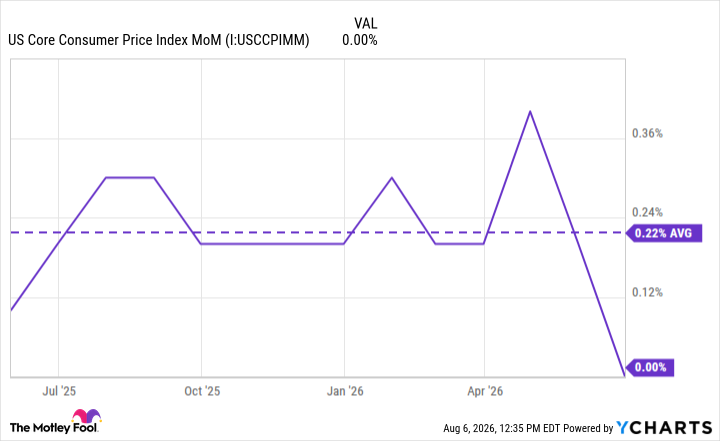
Cleveland Fed's Inflation Nowcasting provides crucial estimates for July and August inflation. For July, the Consumer Price Index (CPI) is predicted to rise by approximately 0.09% monthly and 3.42% annually. Core CPI, excluding volatile food and energy costs, is expected to increase by 0.21% monthly and 2.52% annually. While headline numbers are influenced by energy prices, the core figures are more indicative of underlying inflation trends. Core Personal Consumption Expenditures (PCE), the Fed's preferred metric, is projected to be up almost 0.3% in July, a notable increase from June's 0.1%.
The September FOMC meeting, scheduled for September 15-16, will have the benefit of July's comprehensive data and August's CPI report, due September 11. However, the August PCE data will not be available until after the meeting. The projected monthly core CPI growth of around 0.2% signifies a reacceleration, although it's still slightly below the past year's average. This data could empower both hawkish and dovish factions within the FOMC, potentially leading to further division. The hawks might argue for rate hikes given the reacceleration, while doves could contend that the growth is not significant enough to warrant immediate action. These projections are subject to daily updates, emphasizing the uncertainty surrounding the Fed's upcoming policy decisions.
| Monthly Estimate | July | August |
|---|---|---|
| Consumer Price Index (CPI) | 0.09% | 0.38% |
| Core CPI (ex. food and energy) | 0.21% | 0.20% |
| Personal Consumption Expenditures (PCE) | 0.19% | 0.36% |
| Core PCE (ex. food and energy) | 0.27% | 0.27% |
| Annual Estimates | July | August |
|---|---|---|
| Consumer Price Index (CPI) | 3.42% | 3.45% |
| Core CPI (ex. food and energy) | 2.52% | 2.43% |
| Personal Consumption Expenditures (PCE) | 3.69% | 3.79% |
| Core PCE (ex. food and energy) | 3.31% | 3.36% |
This situation underscores the complexity of monetary policy in an uncertain economic environment. The Federal Reserve's balancing act between controlling inflation and supporting economic growth is becoming increasingly delicate. The impending September meeting promises to be a pivotal moment, as the committee grapples with conflicting data and internal disagreements, potentially leading to significant market implications. Investors and policymakers alike will be closely watching for clearer signals on the future trajectory of interest rates and inflation.