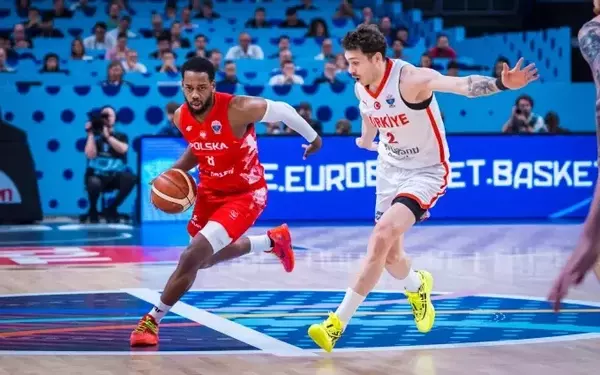
As EuroBasket 2025 draws to a close, FIBA Europe President Jorge Garbajosa and Executive Director Kamil Novak convened for a press conference, not only to reflect on the current tournament but also to cast their gaze toward the future trajectory of European basketball. With only two games remaining, the championship is poised for its climax, as Germany and Türkiye vie for gold, and Greece and Finland contend for bronze.
Garbajosa initiated the discussion by underscoring the tournament's extensive global reach, characterizing it as an unprecedented worldwide phenomenon. He articulated that, beyond football, no other European Championship commands such a substantial international audience, noting significant engagement from global media and fans alike, with the USA ranking among the top three countries for digital channel interaction. According to Garbajosa, EuroBasket 2025 has already eclipsed all previous benchmarks in social media metrics, television viewership, and media interest, even prior to the final matches. Novak subsequently expressed gratitude to the host nations, acknowledging the inherent complexities of orchestrating a major sporting event amid current global uncertainties. He lauded EuroBasket 2025 as a testament to Europe's capacity to deliver such events despite challenging geopolitical circumstances. Shifting focus to the sport itself, Garbajosa commended the efficacy of the qualifying windows introduced in 2017, citing Finland's historic semi-final appearance as a prime illustration of their role in fostering national team development. He also reminded attendees that basketball's momentum would persist beyond Riga, with the FIBA World Cup European qualifier in November determining which teams advance to the 2027 World Cup in Qatar. Addressing the contentious issue of player injuries and roster sizes, Garbajosa indicated a reluctance to expand rosters, citing data suggesting coaches typically utilize nine to ten players. Nevertheless, he expressed openness to further dialogue regarding potential replacements for injured players, emphasizing the organization's collaborative approach to such discussions.
The press conference also delved into the highly anticipated prospect of an NBA Europe. Garbajosa conveyed optimism regarding its potential positive contributions to the sport, recognizing the NBA's unparalleled role in promoting basketball globally. He highlighted ongoing, frequent communications with EuroLeague representatives, acknowledging divergent organizational objectives while emphasizing a mandate for collaboration within the ecosystem. Garbajosa firmly stated that NBA Europe is an inevitable development, albeit one that will require time and effort to establish effectively, with a tentative launch speculated around 2027. He expressed confidence that this new competition would significantly benefit the European basketball landscape. Finally, the discussion turned to the future venues for EuroBasket, with Spain, Estonia, Greece, and Slovenia selected to co-host the 2029 edition. Garbajosa admitted the selection process was arduous, given the high quality of all six bidding nations. Novak added an intriguing detail: the potential for the opening game of EuroBasket 2029 to be held at Real Madrid's iconic Santiago Bernabéu stadium, an aspiration that has long been pursued and, if realized, would serve as a monumental boost for the sport.
The dedication and collaborative spirit demonstrated in overcoming global challenges to host a successful EuroBasket underscore the enduring power of sport to unite and inspire. The forward-looking discussions about NBA Europe and innovative venue concepts like the Santiago Bernabéu opening game signify a vibrant future for European basketball, characterized by continuous growth, broader appeal, and an unwavering commitment to excellence.