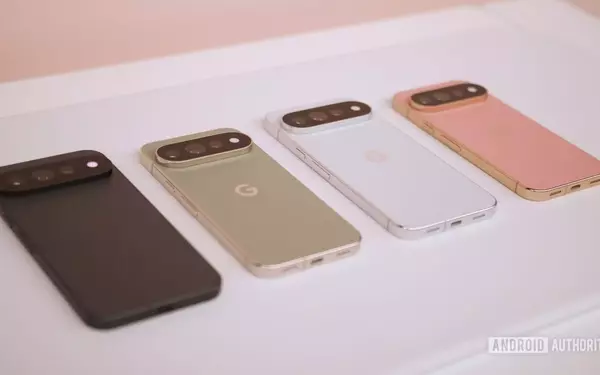
A direct comparison reveals how the newly launched Google Pixel 11 Pro XL stacks up against the prominent Samsung Galaxy S26 Ultra, both vying for supremacy in the high-end Android smartphone market. These two colossal devices represent the pinnacle of their respective manufacturers' engineering prowess, each offering distinct advantages.
Examining the core components, the Pixel 11 Pro XL introduces Google's Tensor G6 processor, fabricated using TSMC's advanced 2-nanometer process, promising enhanced AI operations, extended battery life, and improved thermal regulation. In contrast, the Galaxy S26 Ultra leverages Qualcomm's formidable Snapdragon 8 Elite Gen 5 chipset, featuring its third-generation Oryon CPU, Adreno GPU, and Hexagon NPU, renowned for its raw computational power and sustained performance across various demanding tasks. While the Pixel's processor aims for efficiency, the Snapdragon's established track record in gaming, AI, and image processing suggests a potentially superior overall performance in the S26 Ultra. Both devices commence at an identical price point, offering similar RAM configurations, although storage options influence the highest-tier RAM on the Pixel.
In terms of photographic capabilities, the Samsung Galaxy S26 Ultra boasts a versatile quad-camera system, including a 200MP primary sensor, a 50MP ultrawide, and dual telephoto lenses (10MP with 3x optical zoom and 50MP with 5x optical zoom). The Pixel 11 Pro XL counters with a triple-camera setup, featuring a 50MP main sensor, a 48MP ultrawide, and a 48MP telephoto lens. Although the S26 Ultra offers greater hardware diversity, Google's long-standing expertise in computational photography, utilizing AI for superior image processing, could level the playing field. Beyond cameras, the Pixel 11 Pro XL distinguishes itself with a significantly brighter display, reaching 3,600 nits of peak brightness compared to the S26 Ultra's 2,600 nits, which is a considerable advantage for outdoor visibility. However, the S26 Ultra offers unique features such as a customizable Privacy Display and the integrated S Pen, enhancing its utility.
Ultimately, while awaiting comprehensive benchmark results for the Pixel 11 Pro XL's Tensor G6 processor, the Samsung Galaxy S26 Ultra appears to hold a lead in several critical areas. Its robust Snapdragon processor, coupled with a more extensive camera hardware configuration, currently offers a more compelling package for a broader range of users. The S26 Ultra's proven performance in intensive applications like gaming and image processing, combined with its distinct features like the S Pen, suggests it provides greater overall value and versatility. This comparison underscores the constant innovation in the smartphone industry and highlights how manufacturers are pushing boundaries to deliver advanced user experiences, with each device bringing its unique strengths to the forefront of technological excellence.