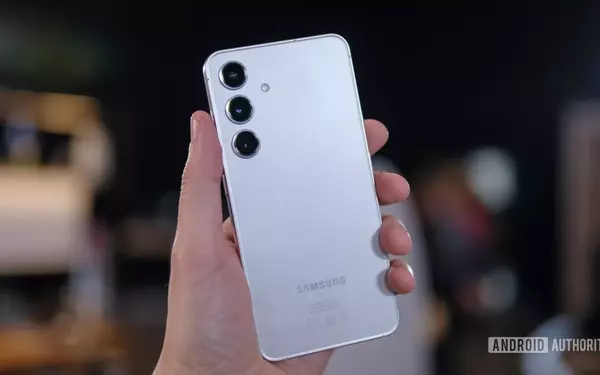
The upcoming Samsung Galaxy A58 is drawing attention as new information emerges, particularly regarding its charging capabilities and camera specifications. While some aspects remain consistent with previous models, certain features highlight its competitive edge in the mid-range smartphone market. This analysis delves into the confirmed charging speeds and anticipated camera setup, comparing them with both its predecessors and upcoming flagship models.
Reports suggest that the Galaxy A58 will maintain a 45W charging rate, a specification identical to its immediate predecessor, the Galaxy A57. This consistency, while not an upgrade, positions the A58 favorably against more premium devices like the base Galaxy S27, which is expected to offer slower charging. Furthermore, the camera system is also projected to remain unchanged, featuring a 50MP primary sensor, a 12MP ultrawide lens, and a 5MP macro camera, a configuration that has proven effective in previous iterations.
Consistent Charging Performance
The Galaxy A58 is confirmed to feature a maximum charging speed of 45W, a detail revealed through recent regulatory certifications. This charging rate is identical to that found in both the Galaxy A57 and Galaxy A56, indicating Samsung's decision to maintain this specification across several generations of its mid-range A-series devices. Despite the lack of an upgrade in charging speed, the 45W capability remains a strong point for the A58, especially when compared to Samsung's flagship offerings. For instance, this charging rate is notably superior to what is expected from the base model of the upcoming Galaxy S27, which is projected to offer slower charging speeds. This sustained performance in the mid-range segment ensures that users can still benefit from reasonably quick power-ups, a crucial factor for many smartphone users today.
Maintaining the 45W charging speed for the Galaxy A58 signals Samsung's strategy to provide a reliable and consistent user experience within its popular A-series. While some consumers might hope for faster charging, especially as competitors push for higher wattages, Samsung appears to prioritize stability and proven technology for this segment. The certification from China's 3C body explicitly lists this charging rate, leaving little room for speculation. This consistent charging capability, inherited from its predecessors, ensures that users upgrading from older A-series models will not experience a downgrade in this crucial area. The comparative advantage over the base Galaxy S27 also highlights the A58's value proposition, offering a premium feature often associated with higher-end devices at a more accessible price point. This decision underlines Samsung's commitment to balancing innovation with cost-effectiveness in its mid-range portfolio.
Unchanged Camera and Battery Expectations
Beyond charging, the Galaxy A58 is also expected to carry over its camera specifications from the previous generation, meaning no significant upgrades in imaging hardware. The device is anticipated to feature the same triple-camera setup: a 50MP main sensor, a 12MP ultrawide lens, and a 5MP macro camera. This configuration has been a staple in recent A-series models, delivering dependable performance for everyday photography. While some users might have hoped for improvements, maintaining this setup allows Samsung to potentially focus on other areas or maintain competitive pricing. Interestingly, the Galaxy A38 is rumored to adopt an identical camera system, which could enhance its appeal within its own segment by offering advanced camera capabilities for a lower price point. This standardization across different A-series models could simplify production and ensure a consistent quality experience.
Regarding battery capacity, specific details for the Galaxy A58 remain undisclosed. However, given that both the Galaxy A57 and Galaxy A56 were equipped with 5,000mAh batteries, it is reasonable to expect a similar capacity for the A58. There is a possibility that Samsung might incorporate new silicon-carbon-backed battery technology, which could lead to either an increase in overall battery capacity or, more subtly, a reduction in the phone's physical weight while maintaining the same capacity. The Galaxy A57 was already praised for its slim and lightweight design, so any advancements in battery technology that contribute to maintaining or enhancing this aspect would be well-received. Ultimately, while the A58 might not introduce groundbreaking changes in its camera or a dramatic shift in battery size, the focus appears to be on refining existing successful elements and offering a consistent, reliable mid-range smartphone experience.