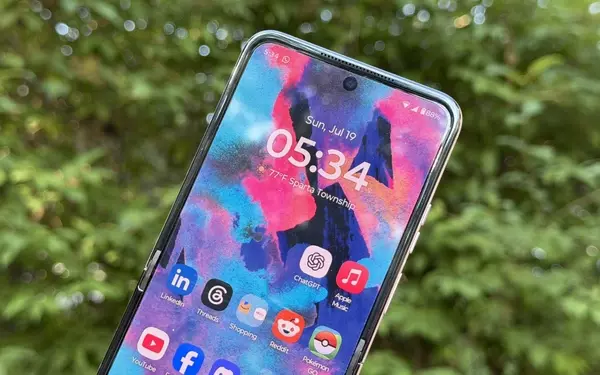
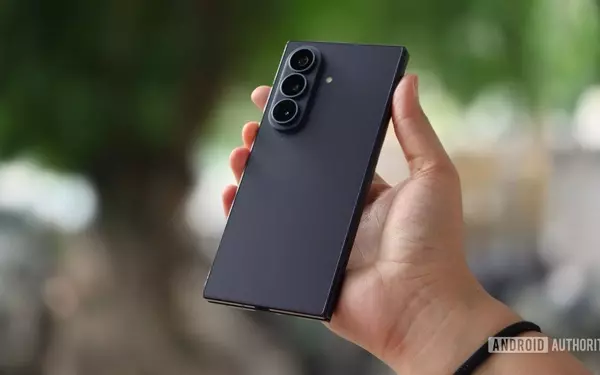
The recently released Galaxy Z Fold 8 has successfully undergone comprehensive durability evaluations, including a thorough bend test conducted by JerryRigEverything, which validated its structural strength. Nevertheless, familiar challenges persist, specifically concerning the vulnerability of its internal display to scratches and its inadequate defense against dust intrusion. These observations highlight that despite advancements in design and materials, certain inherent weaknesses in foldable smartphone technology remain to be fully addressed. The testing process sheds light on both the device's enhanced resilience and the areas where further improvements are needed to bolster its long-term robustness.
Samsung's new foldable smartphone, the Galaxy Z Fold 8, which launched last month, has garnered significant attention for its broad yet compact design. Despite its notably slim profile, questions arose regarding its overall durability. To address these, the popular YouTube channel JerryRigEverything performed a detailed teardown and durability assessment. The testing revealed that the inner display, despite incorporating Samsung's new Flex Titanium structure, which involves replacing a layer of the folding screen's plastic film with a titanium alloy film, still exhibited easy scratching. The host, Zack Nelson, noted that the screen scratched at level two on the Mohs hardness scale, with deeper marks made by a fingernail.
This susceptibility to scratching is largely attributed to the pre-applied plastic screen protector, which Samsung advises against removing. Furthermore, while Samsung highlighted the Flex Titanium structure for enhancing the display's thinness, strength, and impact resistance, scratch resistance was not emphasized. The device's cover display, featuring Gorilla Glass Ceramic 3, performed more favorably, showing scratches at level six and deeper grooves at level seven on the Mohs scale, consistent with conventional smartphone displays.
Additional tests highlighted ongoing durability challenges. When subjected to sand and gravel, the device's hinge produced a noticeable "crunch" sound upon folding, underscoring the limitations of its IP48 rating in terms of dust protection. Despite these issues, the bend test demonstrated impressive structural integrity. When folded, the device proved rigid, and even when unfolded and bent backward considerably, the inner display remained undamaged. Internal examination during the teardown revealed that both the inner screen and back cover utilize strong adhesives, necessitating heat and pry tools for removal. However, the dual silicon-carbon batteries were found to be relatively easy to remove thanks to integrated pull tabs. The hinge mechanism itself was noted to have three core elements, a reduction from the Fold 7's four, while the Galaxy Z Flip 8 uses just two. The speakers and SIM tray were also observed to have rubber seals, contributing to water resistance.
In summary, the Galaxy Z Fold 8 represents a significant step in foldable phone evolution, showcasing robust structural integrity in bend tests and incorporating advanced materials like Flex Titanium and Gorilla Glass Ceramic 3. However, persistent vulnerabilities, such as the inner screen's susceptibility to scratches and the device's limited dust resistance, indicate that while progress has been made, there remains a need for further innovation to achieve comprehensive durability in future foldable designs.