GE Vernova, emerging as an independent entity from General Electric in 2024, has demonstrated remarkable initial market performance. Its stock, which commenced trading at $143, reached approximately $994, reflecting substantial appreciation. This impressive trajectory is largely fueled by the surging demands for power from expanding cloud infrastructure, artificial intelligence (AI) technologies, and data centers. The company's order backlog dramatically increased by 37% year-over-year, reaching $176.3 billion in the second quarter of 2026. However, despite this robust growth and backlog, the stock experienced a decline of about 5% over the past month, contrasting with a 3% rise in the S&P 500. This article will delve into the underlying reasons for this recent downturn and assess if it represents a favorable opportunity for long-term investors.
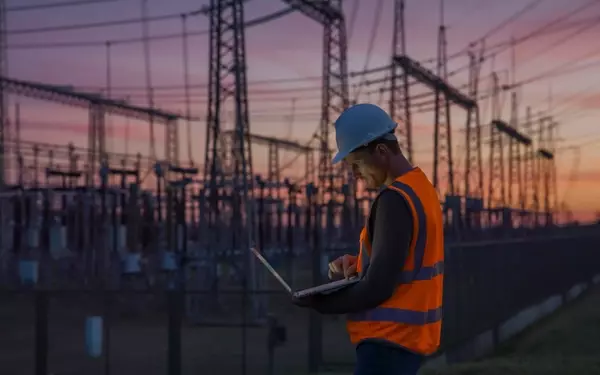
GE Vernova's operations are segmented into three primary divisions: Power, Electrification, and Wind. The Power division, accounting for 55% of its 2025 orders, specializes in gas turbines for combined-cycle plants, steam turbines for various power generation facilities including coal, gas, and nuclear, and provides services for nuclear power plants. The Electrification segment, responsible for 33% of orders, supplies critical components such as transformers, breakers, and substations, along with advanced high-voltage direct current systems. It also offers automation, optimization, and protection services for electrical grids. Lastly, the Wind segment, comprising 13% of orders, focuses on the sale of onshore and offshore wind turbines, a sector that has faced challenges but remains a key part of the company's portfolio.
The company showcased strong organic order growth of 34% in 2025, a notable acceleration from the 7% growth observed in 2024. This growth was predominantly driven by a significant 51% surge in Power orders and a 23% increase in Electrification orders, as utility providers expanded their infrastructure to accommodate the increasing energy needs of cloud and AI markets. This strong performance in Power and Electrification largely counterbalanced the slower growth in the Wind segment, which encountered supply chain disruptions. In the first half of 2026, total orders escalated by an impressive 89% compared to the previous year, with Power and Electrification orders jumping by 99% and 131% respectively, further offsetting an 11% dip in Wind orders. For the entirety of 2026, GE Vernova anticipates a revenue increase of 19% to 22%, alongside an expansion of its adjusted earnings before interest, taxes, depreciation, and amortization (EBITDA) margin from 8.4% to a projected 12%-14%.
Despite the strong operational performance and a substantial backlog, GE Vernova's stock faced a retraction after its second-quarter earnings report on July 22. This pullback can be attributed to several factors. Firstly, the company's adjusted EBITDA and earnings per share (EPS) fell short of Wall Street's projections. This miss was primarily due to increased spending aimed at boosting capacity and additional losses incurred within the Wind division's offshore and onshore operations. Secondly, the stock's valuation was already at a premium, implying that the market had high expectations for flawless performance. Consequently, any perceived deviation from these high expectations led to a downward adjustment in its share price. While the company's enterprise value stands at $255 billion, and it trades at a forward adjusted EBITDA multiple of 40, which may appear expensive, the significant growth potential driven by AI in its Power and Electrification divisions could justify this higher valuation, making it an attractive long-term investment opportunity.
GE Vernova, despite a recent stock correction, continues to demonstrate robust underlying business strength and strategic positioning within high-growth sectors. The ongoing expansion of AI and data center markets provides a strong demand foundation for its Power and Electrification segments, which have consistently shown impressive order growth. While investor sentiment reacted to short-term misses in earnings and increased operational costs, these factors are largely tied to strategic investments aimed at future capacity and long-term expansion. The company's substantial and growing backlog underscores its integral role in the evolving energy landscape. For discerning investors, the current valuation, while high, is supported by significant future growth prospects, particularly as the global economy increasingly relies on power-intensive technologies.