The global bond market has experienced significant volatility following Germany's ambitious infrastructure and defense spending plans. These developments have led to a sharp rise in yields, impacting not only European markets but also spreading to Asia and the United States. The unprecedented scale of fiscal support from Germany, coupled with broader geopolitical shifts, is reshaping investor expectations about economic resilience and defense capabilities in Europe. Analysts suggest that this shift could mark a turning point in how global markets perceive Europe's long-term growth prospects.
Fiscal Expansion Signals a New Era for European Economy
The recent announcement by Germany’s political leaders has introduced a substantial change in the country's fiscal policy. A 10-year infrastructure investment program worth approximately $539.8 billion, along with increased defense expenditures, signals a significant departure from previous austerity measures. This newfound willingness to invest heavily in public infrastructure and national security reflects a strategic pivot aimed at bolstering economic resilience and enhancing defense capabilities. Such a move has profound implications for both domestic and international financial markets.
Germany's decision to allocate substantial funds towards infrastructure development and defense spending represents a monumental shift in its economic strategy. Historically known for its conservative fiscal policies, Germany now embraces an expansive approach, which could redefine its role in the global economy. The infrastructure investment program, equivalent to 12% of GDP, aims to modernize critical sectors such as transportation, energy, and telecommunications. Meanwhile, the exemption of defense spending from borrowing caps underscores the government's commitment to strengthening military readiness. This fiscal expansion is likely to increase bond issuance, driving up yields and influencing investor behavior across the continent. Analysts compare this transformation to the reunification era, highlighting the magnitude and speed of these changes. As Europe adapts to new geopolitical realities, this shift may challenge preconceived notions of secular stagnation and reinforce confidence in Europe's independent future.
Geopolitical Factors Influence Global Bond Yields
Beyond Germany's internal decisions, broader geopolitical dynamics are playing a crucial role in shaping global bond yields. The European Union's push for increased defense spending and the potential realignment of US foreign policy have created a ripple effect in international markets. Reports of a pause in US military aid to Ukraine and calls for NATO members to boost defense budgets add layers of complexity to the current economic landscape. These developments underscore the interconnectedness of global economies and the impact of geopolitical events on financial markets. Consequently, bond yields in various regions, including Japan, Australia, and New Zealand, have seen notable increases, reflecting heightened uncertainty and shifting investor sentiment.
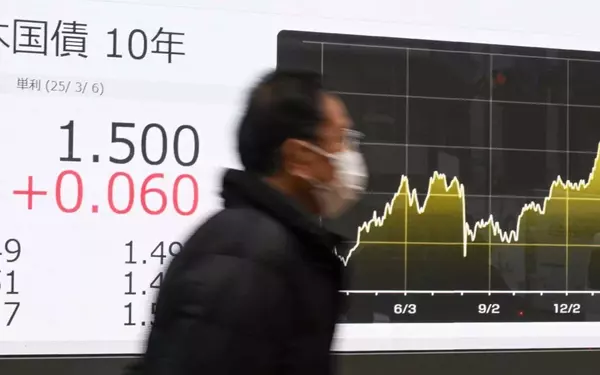
The influence of geopolitical factors on global bond markets cannot be overstated. With the European Union announcing plans to enhance defense capabilities, there is a growing recognition of the need to secure Europe's future independently. This shift is particularly evident in the context of changing US foreign policy under the Trump administration, where calls for NATO allies to increase defense spending have gained traction. Additionally, the potential slowdown in US military aid to Ukraine has prompted European countries to reassess their defense strategies. As a result, bond yields across multiple regions have risen, signaling a recalibration of market expectations. In Japan, the 10-year yield reached levels unseen since 2009, while similar trends were observed in Australia and New Zealand. Moreover, expectations of further fiscal stimulus from China and signals from the Bank of Japan about higher benchmark rates have contributed to the overall market turbulence. In the US, the 10-year Treasury yield has climbed to around 4.3%, raising concerns about the impact on consumer debt interest rates. This complex interplay of factors highlights the global nature of financial markets and the far-reaching consequences of geopolitical shifts.