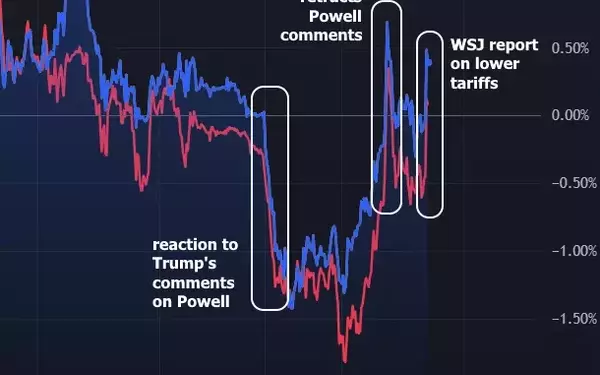
A wave of economic instability has swept across the global financial landscape, primarily driven by recent trade tensions. Investors are experiencing a period of heightened volatility as traditional safe-haven assets no longer provide the security they once did. The repercussions have been felt in stock markets worldwide, where gains from previous years are now being reversed.
Amidst these shifts, U.S. stocks have seen significant losses after two years of remarkable growth. The S&P 500 index, often regarded as a barometer for overall market health, has dropped more than 13% this year alone. Growth-focused indices like the Nasdaq composite have fared even worse, plummeting nearly 20%. In contrast, international markets have shown resilience, outperforming their American counterparts. This divergence highlights growing concerns about the direction of the U.S. economy and its impact on global stability.
In times of turmoil, investors typically turn to bonds and precious metals for protection. However, U.S. Treasurys, traditionally viewed as risk-averse investments, have exhibited unusual fluctuations throughout the year. Yields on the 10-year Treasury bond, which influence mortgage rates and loans, initially rose before falling sharply following announcements of new trade policies. Conversely, gold has emerged as a reliable refuge, reaching record highs amid ongoing uncertainty. Spot gold prices soared close to $3,343 per Troy ounce, reflecting sustained investor interest in commodities during periods of economic unpredictability.
The foreign exchange market has also been affected, with the U.S. dollar losing value against major currencies due to uncertainties surrounding tariffs and inflation. A weaker dollar complicates borrowing for both businesses and consumers while potentially stifling economic expansion. Meanwhile, energy prices have experienced mixed trends; although gasoline costs have decreased, this decline signals anticipation of an impending economic slowdown. Oil benchmarks such as West Texas Intermediate crude and Brent crude have fallen significantly, raising concerns among economists about potential job losses within the energy sector.
As digital currencies continue to evolve, Bitcoin remains a focal point for investors seeking alternative opportunities amidst conventional market challenges. Despite experiencing dramatic price swings—from over $109,000 at the beginning of the year to under $75,000 during recent sell-offs—Bitcoin still trades well above levels observed just a few years ago. Notably, government actions, including executive orders promoting cryptocurrency adoption, indicate shifting attitudes toward digital assets. These developments underscore the importance of adaptability and innovation in navigating today's complex financial environment, reinforcing the need for diversified strategies to safeguard wealth during uncertain times.