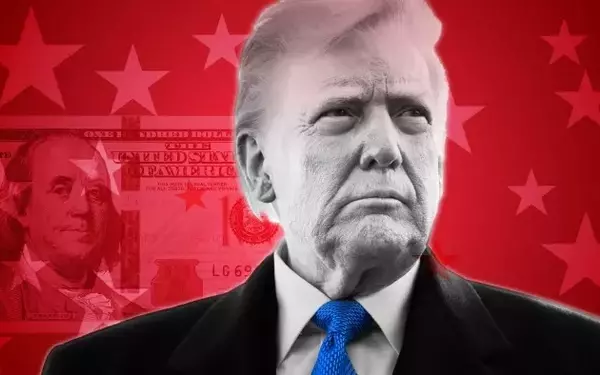
International high-yield bonds faced a significant sell-off on Friday, driven by China's response to the latest tariffs imposed by US President Donald Trump and Federal Reserve Chair Jerome Powell's indication of no immediate plans to cut interest rates. The yield gap between these bonds and Treasuries reached its highest point since November 2023, reflecting heightened market uncertainty.
This surge in yields has sparked concerns among investors regarding the stability of global financial markets. With spreads widening significantly, it indicates an increased perception of risk associated with holding such securities, influenced heavily by geopolitical tensions and monetary policy expectations.
Market Reaction to Geopolitical Developments
As China retaliated against new US tariffs, the global bond market responded sharply, with high-yield bonds bearing the brunt of this reaction. Investors became more cautious, leading to a notable increase in the yield premium demanded for owning these risky assets over safer government bonds. This movement underscores how sensitive financial markets are to international trade disputes.
The escalation in trade tensions between the world's two largest economies has had ripple effects across various asset classes. The decision by China to counteract US tariff measures added fuel to an already volatile situation. Consequently, investors started reevaluating their portfolios, prioritizing security over higher returns amidst growing uncertainty about future economic relations between the nations. This shift was evident as they sought refuge in less risky investments like US Treasuries, thereby increasing demand and lowering yields on those instruments while simultaneously driving up yields on corporate junk bonds.
Monetary Policy Expectations Impacting Bond Markets
In addition to geopolitical factors, statements from Federal Reserve Chair Jerome Powell also played a crucial role in shaping investor sentiment towards high-yield bonds. His remarks suggested that there would be no rush to lower interest rates, which disappointed some market participants who were hoping for easier monetary conditions. Such expectations can significantly influence borrowing costs and profitability outlooks for companies issuing such debt.
Powell's stance indicated continuity in current monetary policies unless compelling evidence emerges warranting change. For high-yield bondholders, this meant continued exposure to potentially rising interest rate environments without imminent relief through policy adjustments. As a result, many opted to reduce holdings in these more speculative securities until clearer signals emerge regarding both domestic economic health and international trade dynamics. This adjustment process further pressured yields upward, amplifying volatility within the sector during what is already a tumultuous period marked by escalating global trade conflicts.