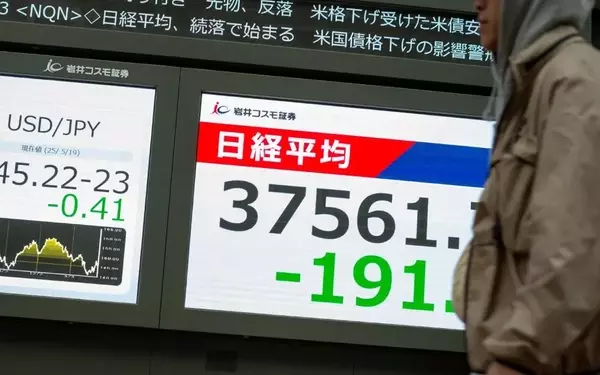
Global Markets React to Moody's U.S. Debt Downgrade
·5 min read
Advertisement
Financial markets in the United States experienced a downturn on Monday, as Moody’s Ratings delivered a significant announcement that could reshape global perceptions of American fiscal responsibility. The downgrade of the U.S. federal government’s credit rating from its top-tier status has sent ripples through stocks, bonds, and the value of the dollar.
Market Shifts Amid Fiscal Uncertainty
The repercussions of Moody’s decision extend beyond Wall Street, influencing investor sentiment worldwide and raising questions about the future of U.S. economic policy.
Moody's Decision: A Catalyst for Market Fluctuations
The decision by Moody’s Ratings to lower the U.S. federal government’s credit rating reflects an ongoing concern about unsustainable debt levels. In response, the S&P 500 dipped slightly during midday trading, while the Dow Jones Industrial Average and Nasdaq Composite also reflected downward trends. This reaction underscores the market's sensitivity to perceived fiscal instability, even when such concerns are not entirely novel.Investor confidence has been shaken not only by the sheer volume of U.S. government borrowing but also by the political stalemate that hinders effective fiscal management. Despite these challenges, some analysts argue that the market impact may be limited due to the pre-existing awareness of Washington’s fiscal shortcomings. Wells Fargo Investment Institute’s Brian Rehling suggests that initial sharp declines were gradually tempered as traders reassessed the implications of Moody’s actions.
Treasury Yields and Investor Sentiment
The yield on the 10-year Treasury bond saw a notable increase, briefly surpassing 4.55% before stabilizing at 4.49%. This fluctuation highlights the direct correlation between credit ratings and borrowing costs. Similarly, the yield on the 30-year Treasury bond demonstrated volatility, climbing above 5% compared to figures recorded in September. Such movements indicate a potential shift in investor expectations regarding risk and return in U.S. government securities.A downgrade by a major credit agency like Moody’s serves as a cautionary signal to global investors, advising them against lending to the U.S. government under current conditions without demanding higher interest rates. This scenario could lead to broader economic ramifications, including elevated borrowing costs for households and businesses across various sectors, potentially stifling economic growth.
Economic Pressures Beyond Credit Ratings
Amidst the focus on credit downgrades, other economic factors continue to weigh heavily on investor minds. President Donald Trump’s trade policies have introduced uncertainty into global markets, challenging the traditional safe-haven status of U.S. bonds and the dollar. Retail giants such as Walmart have voiced concerns about tariff impacts, leading to price increases and subsequent market reactions.The upcoming earnings reports from major retailers will provide further insight into how tariffs and broader economic pressures are affecting corporate profitability. Companies like Target, Home Depot, Lowe’s, and TJX Cos. are poised to reveal their latest financial performances, offering critical data points for market analysts.In contrast, positive developments in specific sectors offer a glimmer of hope. For instance, Novavax’s stock surged following regulatory approval of its COVID-19 vaccine, illustrating the potential for innovation-driven gains amidst macroeconomic turbulence.
International Perspectives and Currency Movements
Beyond domestic considerations, international markets exhibit mixed responses to U.S. fiscal developments. European and Asian indices displayed modest movements, reflecting the interconnected nature of global economies. Data from China indicated slower-than-expected retail sales growth and decelerating industrial output, contributing to regional market hesitations.The decline in the U.S. dollar’s value against multiple currencies, including the euro and Australian dollar, signifies shifting dynamics in foreign exchange markets. These currency fluctuations highlight the intricate balance between national fiscal policies and their international ramifications, emphasizing the need for comprehensive strategies to address mounting debt challenges.As Washington prepares to navigate debates over tax cuts and borrowing limits, the path forward remains uncertain. The interplay between fiscal policy decisions and market reactions will undoubtedly shape the trajectory of both the U.S. and global economies in the coming months.