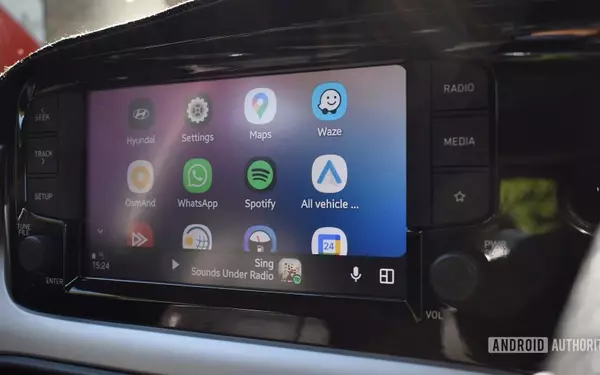
Google Maps has rolled out a groundbreaking visual enhancement, "Immersive Navigation," for Android Auto, marking the most substantial update to its mapping interface in over ten years. This innovative feature, which leverages advanced AI to render highly detailed 3D environments, is designed to significantly improve the driving experience by addressing long-standing navigation difficulties, particularly in bustling urban settings.
This transformative update, dubbed "Immersive Navigation," was first unveiled by Google several months ago. Initially rolled out to Android smartphone users, it is now progressively becoming available on car dashboards through Android Auto. This enhancement is not merely a cosmetic change; it's a fundamental shift in how users perceive and interact with their navigation systems.
Upon activating the new Maps via Android Auto, the most striking change is the transition from a conventional 2D, top-down view to a sophisticated 3D perspective. This new mode renders lifelike building outlines, distinct lane indicators, and clear visual representations of elevated roads and underpasses. While the previous versions of Maps did offer some 3D building models in select areas, this updated iteration elevates the visual fidelity to an unprecedented level, incorporating elements like individual tree markers to provide a more holistic understanding of the surroundings. This intricate detail is made possible by Gemini's advanced analysis of Street View and aerial photography, ensuring an accurate and true-to-life depiction of the navigational environment.
During a test drive through uptown Charlotte, North Carolina, the immediate benefit of Immersive Navigation became evident. The ability to view buildings with realistic, albeit translucent, outlines greatly simplified orientation. This transparency is crucial, as it allows drivers to see through structures and anticipate upcoming maneuvers without obstruction. Moreover, the feature highlights specific building entrances and parking facilities, which often do not align directly with their listed addresses, thus minimizing confusion and delays.
Another significant improvement is the clarity provided for complex road structures. Lane markings are prominently displayed, especially in densely populated areas, guiding drivers to position themselves correctly for turns and exits. The distinction between overpasses and underpasses is now unequivocally clear, eliminating guesswork and ensuring drivers choose the appropriate level of the road. The Maps camera also intelligently zooms in on challenging freeway interchanges and multi-lane junctions, offering precise visual cues for navigation.
Complementing these visual upgrades is a more intuitive voice guidance system. The new voice prompts are designed to be more conversational and less reliant on abstract distance measurements. Instead of generic instructions like "In one mile, exit right," drivers might now hear more precise directions such as, "Go past this exit and take the next one for South Tryon Street." This contextual guidance helps drivers make more informed decisions, especially when navigating unfamiliar or intricate routes.
Even for experienced drivers familiar with their local areas, the updated Google Maps view in Android Auto proves to be remarkably beneficial. It effectively resolves prior navigational ambiguities, transforming challenging driving scenarios into more manageable experiences. This phased rollout means that while some users may already be enjoying these enhancements, others can anticipate receiving the update in the near future, promising a significant improvement in their daily commutes and travels.