Unveiling the Pixel 10 Pro Fold: A Deep Dive into its Offerings
Initial Impressions of the Pixel 10 Pro Fold: Blending Innovation with Familiarity
The Google Pixel 10 Pro Fold presents a compelling proposition for those seeking the adaptability of a folding handset alongside the streamlined experience of Google's operating system. It boasts exceptional resilience and prolonged battery life, making it a joy to use. However, its hefty price tag of $1,799, coupled with a conservative design, an underpowered processor, and uninspiring cameras, makes it a difficult recommendation for anyone other than dedicated Pixel enthusiasts.
Robust Construction and Integrated Magnetic Features: A Sturdy Yet Substantial Device
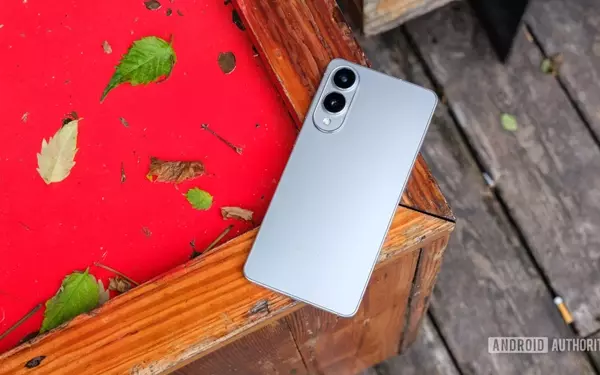
Let's begin our discussion with the device's design and physical attributes. A significant advantage of the Pixel 10 Pro Fold is its unparalleled durability among foldable smartphones. This resilience is attributed to two primary factors: a novel gearless hinge and an IP68 water and dust resistance rating, a first for a folding device.
My real-world experience inadvertently tested these features. During an evening at the cinema, the phone slipped from my pocket, tumbling onto a hard floor and striking the metal seat frame. On another occasion, it fell onto the carpeted floor of a bar. Furthermore, exposure to dust and dirt during visits to farms and pumpkin patches provided additional stress tests.
Despite these incidents, the device shows no signs of wear. The hinge retains its original firmness and fluid motion, the aluminum frame is unblemished, and the outer display remains pristine. It's truly impressive to own a folding phone that can withstand the rigors of daily life, a testament to Google's engineering prowess.
Another notable hardware feature is the Fold's integrated magnets. Like other devices in the Pixel 10 series, the Pixel 10 Pro Fold incorporates magnets beneath its back panel, ensuring compatibility with Google's Pixelsnap accessories, the entire MagSafe ecosystem, and other Qi2 magnetic charging solutions. While some initial Pixelsnap accessories have been underwhelming, the ability to attach my MagSafe wallet and utilize existing magnetic charging stands has been incredibly convenient.
However, this is where the device's contradictory nature emerges. The reason my Pixel 10 Pro Fold slipped from my pocket that night is its considerable weight.
Weighing 258 grams, it stands as one of the heaviest foldables launched this year. For comparison, the Galaxy Z Fold 7 is lighter at 215 grams. Google's foldable also lags in terms of thickness, measuring 10.8mm when closed, whereas the Z Fold 7 is a more slender 8.9mm. The difference in these dimensions is palpable; the Z Fold 7, when folded, feels like a conventional smartphone, while the Pixel 10 Pro Fold gives the impression of a brick. Even after several weeks of use, its bulkiness and weight remain consistently noticeable.
This aspect is particularly frustrating given that other manufacturers, including Samsung, HONOR, OPPO, and vivo, have made significant strides this year in developing increasingly thin and lightweight foldables. Google missed an opportunity to innovate in this regard, opting instead to reuse the design from last year's Pixel 9 Pro Fold. While the IP68 rating and integrated magnets are commendable, they may not be enough to compensate for this lack of design progression. While the Pixel's design is adequate in isolation, competitors like the Z Fold 7 are operating on a higher plane of innovation.
Visual Excellence and Display Features: A Delightful Viewing Experience
On a more positive note, despite my reservations about the Pixel 10 Pro Fold's design, I am highly impressed by its displays. Both the 6.4-inch outer screen and the 8-inch inner screen offer vibrant and clear visuals. The inner display boasts a wider aspect ratio, which I personally find more appealing than the squarer format of the Z Fold 7. My only minor critique is Google's continued omission of an LTPO panel for the outer screen. While not a critical flaw, it's an expected feature at this price point.
Camera Capabilities: Performance That Fails to Justify the Price Tag
Our discussion of the Pixel 10 Pro Fold's complex nature extends to its cameras. I must preface this by stating that the cameras are competent. They are reliable, easy to operate, and I have captured several satisfying images with the device.
However, for a smartphone priced at $1,799, and especially for a Google Pixel device, I anticipated a significantly higher level of performance.
In terms of specifications, the Pixel 10 Pro Fold's cameras are identical to its predecessor. This includes a 48MP primary sensor, a 10.5MP ultrawide sensor, and a 10.8MP telephoto lens with 5x optical zoom. The megapixel counts for the secondary cameras are already modest, and it's important to remember that all three sensors are considerably smaller than those found in the non-folding Pixel 10 Pro.
During my usage of the Pixel 10 Pro Fold, these limitations became quickly apparent. As noted in my initial impressions, images captured by the Fold are consistently inferior to those from the Pixel 10 Pro, often exhibiting reduced sharpness, overexposed highlights, or a noticeable lack of depth.
Upon closer inspection of the images, their shortcomings become evident. In the photograph of the beverage, the small sensor struggles to achieve a natural background blur, resulting in an overly soft focus on the lemon and the edges of the drink. In the sunset landscape, the sun is excessively exposed. The Fold also had difficulty focusing on the moving miniature horse, and I was quite dissatisfied with the cold, uninviting colors in the pictures of the yawning cat and the apples.
This critique also extends to the primary camera's low-light performance, which significantly degrades after sunset. The Fold struggles with focusing and produces images with a severe lack of detail in dimly lit environments.
What about the ultrawide and telephoto cameras? They are present. The 10.5MP ultrawide camera, with its 127-degree field of view, effectively captures a broader scene. However, there is a distinct drop in quality compared to the primary camera, which is clearly visible in the image of the water fountain.
The 10.8MP telephoto camera offers a similar experience. While the 5x optical zoom range sounds promising, matching that of the Pixel 10 Pro's telephoto lens, the resulting images tell a different story. Although the zoom is beneficial for getting closer to subjects, the Fold fails to capture sufficient detail. While adequate for casual use, this telephoto camera falls short of expectations for a $1,799 smartphone; indeed, it would be considered inadequate even for a $999 device.
You can extend beyond the 5x optical zoom, but the results are equally disappointing. The Pixel 10 Pro Fold produces barely acceptable images at 10x and 20x, its maximum zoom range, with a continued reduction in picture quality. It's also worth noting that the Fold lacks the Pixel 10 Pro's Pro Res Zoom feature, which allows for up to 100x zoom and high-quality captures at 30x and 50x.
One might argue that for a folding phone, the Pixel 10 Pro Fold's cameras are sufficient. However, "sufficient" is not an acceptable standard. While the cameras are functional, they offer nothing extraordinary. They consistently underperform compared to the Pixel 10 Pro, a device $800 cheaper, and offer less functionality. If a phone is branded "Pixel 10 Pro Fold," it should embody Google's core strengths: intelligent software and exceptional cameras. The Pixel 10 Pro Fold fails to uphold Google's reputation for camera excellence, which is a significant concern for a device of this price, regardless of its foldable nature.
Performance Aspects of the Tensor G5 Processor: Balancing Daily Use with Demanding Tasks
Another potential concern, depending on your intended use for the Pixel 10 Pro Fold, is its Tensor G5 chip. This is the same chipset found in the rest of the Pixel 10 series, and similar to my experience with the Pixel 10 Pro, I encountered no performance issues with the Pixel 10 Pro Fold. My typical app usage includes YouTube, X, Reddit, Chrome, Slack, Telegram, and Gmail. The Tensor G5 effortlessly handles these applications, whether used individually or in split-screen mode on the Fold's internal display. Notably, it does so without overheating, marking a significant improvement for Google's Tensor processors.
For such everyday usage, the Pixel 10 Pro Fold performs admirably. However, if you're considering a foldable, you likely envision extensive use for graphically intensive games, photo/video editing, and other demanding tasks that truly shine on a large folding display. For these more intensive uses, I have less confidence in the Tensor G5's capabilities.
Compared to the Pixel 9 Pro Fold and its Tensor G4 chip, the Pixel 10 Pro Fold demonstrates improved CPU performance, particularly in multi-core metrics. However, the Galaxy Z Fold 7, powered by its Snapdragon 8 Elite chip, maintains a substantial lead over Google's latest foldable. The Z Fold 7's GPU also outperforms the Pixel 10 Pro Fold in the Wild Life Stress Test, especially in the initial stages. While both phones eventually stabilize in terms of scores and temperature towards the end of the test, Samsung clearly emerges as the winner.
The G5's lagging performance is not merely evident in benchmarks. While playing Delta Force with default "Exquisite" graphics, the game ran smoothly but lacked visual appeal. Increasing the graphics settings to "Ultimate" improved the aesthetics but introduced frame drops, graphical pop-ins, and jerky animations.
This highlights the central dilemma of the Pixel 10 Pro Fold. Its daily performance is excellent, as is casual gaming. More demanding games are playable, but the experience does not align with the phone's price or the performance of its competitors. For a device like the Pixel 10 Pro Fold, which targets power users seeking to push their devices to the limit, this performance discrepancy is a significant drawback.
Battery Life and Charging Performance: Strengths and Areas for Improvement
On a more positive note, the battery life of the Pixel 10 Pro Fold has been remarkably good. With a combination of Wi-Fi and 5G connectivity, varied application usage, and an approximately 70/30 split between the outer and inner displays, I consistently started my days around 6 AM and reached 11 PM with 20-30% battery remaining, typically achieving four and a half hours of screen-on time daily.
The quickest the battery drained was on a day when it started at 100% at 5 AM and dropped to 6% by 9:15 PM. However, this usage included five hours and 15 minutes of screen time, extensive 5G usage, several benchmark tests, and a considerable amount of YouTube and X. Although our battery benchmarks indicate that the Z Fold 7 still has an edge, I have been quite satisfied with the Pixel 10 Pro Fold's battery performance in real-world scenarios.
What is less impressive is the recharge time. With a maximum wired charging speed of 30W, the Pixel 10 Pro Fold requires 87 minutes to fully recharge from approximately 2%. Google is capable of faster charging speeds, as evidenced by the Pixel 10 Pro XL's 45W capability, but this is not available on the Fold. While not a critical flaw, it represents another frustrating compromise for a phone in this price bracket, mirroring the camera and performance issues.
Software Experience: A Blend of Pixel Excellence and Unexpected Glitches
Despite my criticisms regarding the Pixel 10 Pro Fold's weight and camera performance, Google's software is so exceptional that it mitigates some of these drawbacks. The Pixel 10 Pro Fold's software stands out because it offers the identical Pixel experience found on other Google Pixel devices. This includes features like Now Playing, which identifies background music, the At a Glance widget for daily updates, and Google's superior calling tools, encompassing industry-leading spam filtering and call summaries.
These exclusive Pixel functionalities significantly enhance the user experience, and their presence on the Pixel 10 Pro Fold is noteworthy, even if they aren't unique to this foldable model.
Furthermore, Android 16 with Material 3 Expressive adapts beautifully to the Fold's expansive internal display. The split quick settings and notifications interface is superb, the new 90:10 multitasking UI has proven immensely helpful, and numerous Google applications, such as Gmail, Keep, Maps, Calendar, and Messages, effectively leverage the increased screen real estate. I am also particularly fond of the new Instant View interface in the camera app, which simultaneously displays your viewfinder on one half of the screen and recently captured photos on the other, making ingenious use of the available space.
That being said, I wish Google had implemented more. Currently, you cannot fix the app dock when using gesture navigation, run more than two apps in split-screen mode, utilize apps as floating windows, or have distinct home screen layouts for the outer and inner displays. These are fundamental features for a foldable smartphone in 2025, and it is frustrating that they remain absent on Google's third-generation Pixel Fold.
I have also encountered a surprisingly high number of software glitches during my time with the Pixel 10 Pro Fold. On multiple occasions, when attempting to use face unlock or the fingerprint sensor, the biometric prompt would briefly appear and then vanish, rendering the Fold's biometrics temporarily unusable. Even more frustrating is a connectivity bug that frequently and randomly causes the Pixel 10 Pro Fold to lose its internet connection, despite being connected to perfectly functional Wi-Fi or 5G. For context, I have not experienced any such issues on the Pixel 10 or Pixel 10 Pro, suggesting these bugs are specific to the Fold. I initially suspected this might be an isolated issue with my unit, but other reviews of the Pixel 10 Pro Fold have reported similar software instability. This is particularly disappointing given that the Fold was released a month after its non-folding Pixel 10 counterparts, theoretically providing Google with additional time to resolve any issues. On a positive note, with seven years of software updates and Google's consistent rollout schedule, these bugs should hopefully be addressed soon.
Final Assessment: Is the Google Pixel 10 Pro Fold a Worthwhile Investment?
This brings us to the $1,799 question: should you purchase the Google Pixel 10 Pro Fold? I believe I addressed this perfectly at the outset of this review.
If your next phone absolutely must be a foldable AND a Pixel, then yes, the Pixel 10 Pro Fold is a suitable choice. While you could opt for the Pixel 9 Pro Fold at a discounted price, the Pixel 10 Pro Fold's IP68 rating, enhanced hinge durability, integrated magnets, and newer Tensor G5 chip make it a more compelling upgrade over its predecessor.
However, if you are not firmly committed to a foldable Pixel and have some flexibility in your choice, your money would be better spent elsewhere.
Let's consider the scenario where you desire a folding phone but are not exclusively loyal to the Pixel brand. In the US, your primary alternative is the Samsung Galaxy Z Fold 7. Although it carries a $200 higher price tag than Google's foldable, it offers a superior overall experience. The Z Fold 7 is considerably more ergonomic, features a significantly more powerful chipset, boasts more capable cameras, and its software is better optimized to leverage its large display. While it lacks an IP68 rating, we encountered no durability concerns with the Z Fold during our extensive testing. If I were purchasing a folding phone, despite my appreciation for Google's Pixel software, I would choose Samsung's offering.
Conversely, if you are resolute about owning a Pixel phone but can forgo the foldable form factor, I would recommend the Pixel 10 Pro or, for those desiring a larger screen, the Pixel 10 Pro XL. Both devices offer all the excellent Pixel features found in the Fold, magnetic charging, and significantly better cameras, all at a considerably lower price point.
There is an undeniable allure to experiencing the Pixel ecosystem on a foldable device, and for some individuals, this unique combination will outweigh the Pixel 10 Pro Fold's limitations. However, it's crucial to understand that the Pixel 10 Pro Fold is neither the best foldable available nor the best Pixel phone overall. While we lauded the Pixel 9 Pro Fold a year ago, the foldable market has advanced considerably, and Google has failed to keep pace. This leaves its top-tier Pixel offering as a niche curiosity, a realization that, as a devoted Pixel fan and foldable enthusiast, I find truly regrettable.