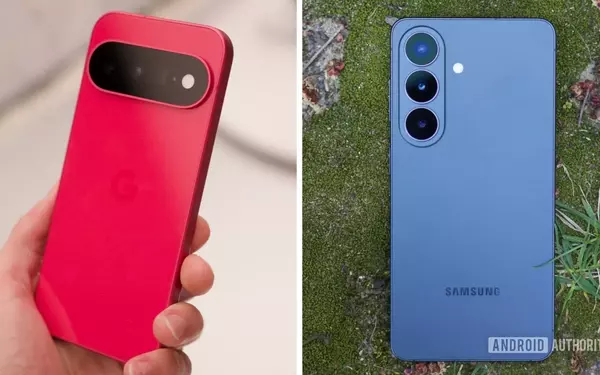
Google's latest Pixel 11 series continues a familiar pattern of delivering consistent, rather than groundbreaking, camera performance. While this approach has solidified the Pixel's reputation for reliable photography, it has also created a stagnation that risks allowing competitors to surpass its capabilities. The current camera architecture, largely in place since the Pixel 6 Pro, is now considered outdated, suggesting a pressing need for more substantial hardware advancements to elevate the Pixel's photographic prowess beyond incremental refinements.
The Evolution of Pixel Camera Technology and the Urgent Need for a New Direction
For years, Google's Pixel smartphones, including the flagship and more affordable variants, have been lauded for their consistent and impressive photographic output. However, the recently launched Pixel 11 series, despite its various models, appears to maintain this consistent, yet cautious, approach to camera innovation. While the Pixel 11 Pro and Pro XL introduce slightly larger ultrawide and telephoto sensors, offering minor improvements in light capture and extended zoom capabilities up to 120x, these are considered modest enhancements within a camera system that has remained fundamentally unchanged for half a decade.
This reluctance to embrace more significant hardware overhauls can be traced back through the Pixel's history. The initial Pixel models (from 2016 to 2018), exemplified by the Pixel 3, established Google's computational photography leadership with a single 12MP camera, pioneering features like HDR+, portrait mode, and Night Sight. Subsequent iterations, such as the Pixel 4 with its 2x telephoto lens and the Pixel 5 with its ultrawide, saw Google experimenting with secondary cameras. However, these additions were often perceived as insufficient to keep pace with the rapidly evolving multi-lens systems of rivals.
A pivotal shift occurred with the Pixel 6 Pro in 2021, which introduced a substantially upgraded 50MP main sensor alongside a 12MP ultrawide and a 48MP 4x telephoto lens. This marked the last major hardware revision for the Pixel camera lineup. Since then, subsequent models have focused on refining this established trio, with minor adjustments like the Pixel 7 Pro's 5x telephoto and the Pixel 8 Pro's improved ultrawide. The Pixel 10 Pro and XL primarily saw software enhancements, while the standard Pixel 10 finally received a telephoto camera.
As of August 2026, many argue that this five-year-old core camera concept is ripe for a complete re-evaluation. Competitors, particularly high-end Chinese smartphones, have demonstrated advancements in versatility through innovations such as 200MP telephoto cameras that offer both close-up and extended zoom capabilities, doubling as powerful portrait lenses. This capability addresses a significant gap in the Pixel series' current offerings, which struggles with portrait photography. Furthermore, the integration of flexible lenses and variable apertures, as seen in devices from Xiaomi, Sony, and rumored for future iPhones, highlights areas where Google could further enhance image quality and user experience.
The debate now centers on whether Google's powerful computational photography, coupled with its custom Tensor processing units, can continue to compensate for increasingly dated hardware. The call from many Pixel enthusiasts and industry experts is for Google to shed its cautious approach and embrace bold hardware innovations, ensuring that the Pixel 12 and subsequent models are equipped to lead, rather than follow, in the fiercely competitive smartphone photography landscape.
As an avid observer of the smartphone industry, I believe Google's current strategy with its Pixel camera system, while delivering consistent results, is increasingly unsustainable. The technological advancements in mobile photography have accelerated dramatically, and relying heavily on computational photography to compensate for hardware limitations risks alienating users who seek cutting-edge capabilities. The robust computational backbone of Pixel phones offers a phenomenal foundation, but imagine its potential when paired with truly innovative sensor technology and versatile lens systems. Google has the opportunity to redefine mobile photography once again, not just through software wizardry, but through a harmonious blend of hardware and software brilliance. It's time for Google to take a bold leap, moving beyond predictable refinements and embracing the next generation of camera technology to solidify the Pixel's position as an undisputed leader in the field.