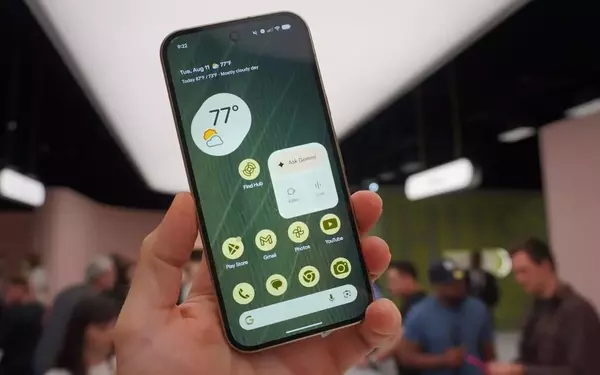
The newly unveiled Google Pixel 11 series is poised to transform the realm of smartphone photography by offering users an advanced degree of control over image aesthetics. Responding to widespread desires for less artificial and more natural photo outcomes, Google has introduced a groundbreaking feature known as 'Camera Looks.' This innovation allows individuals to escape the common pitfall of over-processed digital images, providing a spectrum of visual styles from deeply detailed to subtly muted, alongside an array of vintage film-inspired filters, reminiscent of traditional photography.
Pixel 11 Elevates Photography with Customizable Looks and Nostalgic Filters
On August 12, 2026, Google officially launched the Pixel 11 series, a significant stride in mobile imaging. The highlight is the introduction of 'Camera Looks,' a feature that mirrors and expands upon the Photographic Styles found in iPhones. This allows users to meticulously refine the visual character of their photographs. Four distinct presets are available: 'Original' for an untouched capture, 'Natural' for a soft, understated appearance akin to iPhone photography, 'Shadows' to enhance contrast, and 'Vanilla' for a warm, gentle glow. Crucially, each of these 'Looks' can be customized and saved as a default setting, ensuring a consistently personalized photographic style. Beyond these customizable options, the Pixel 11 camera also integrates six retro-themed filters, including a monochrome option, designed to evoke the timeless charm of classic film photography. These additions aim to fulfill the growing demand for more authentic and less digitally altered images. Google has stated that these features are currently exclusive to the Pixel 11 series, though there's a possibility they might extend to older Pixel devices in the future. The company explicitly engineered these camera capabilities to minimize aggressive HDR processing, with sensor-level color lookup tables (LUTs) meticulously crafted to emulate the chemical processes involved in developing film negatives, delivering an unparalleled depth and realism to digital photographs.
This strategic move by Google demonstrates a keen understanding of evolving consumer preferences in mobile photography. By empowering users with granular control over image processing and offering a nod to classic photographic aesthetics, the Pixel 11 not only addresses existing criticisms but also sets a new benchmark for creative expression in smartphone cameras. It suggests a future where computational photography harmonizes with artistic intent, allowing every user to become a curator of their visual memories.