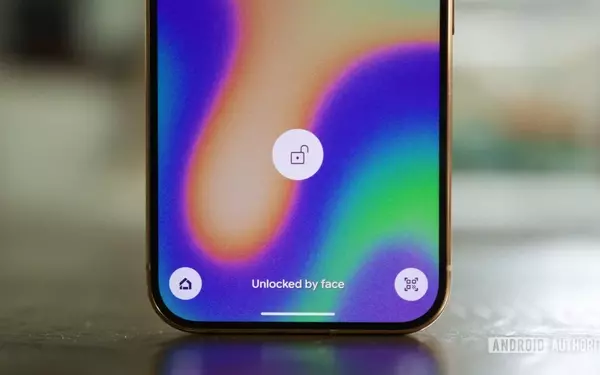
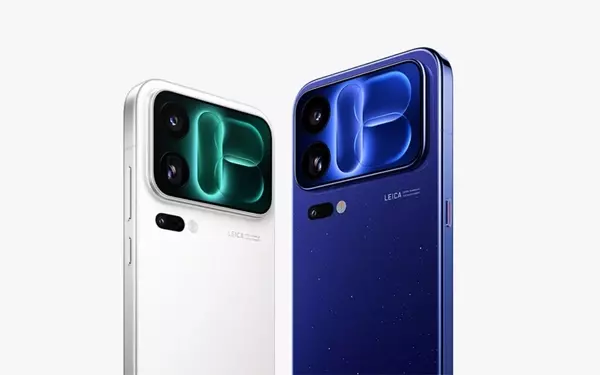
The Google Pixel 11 Pro, despite its many commendable features such as an exceptional camera system, refined aesthetics, and superior software experience, is not without its flaws. Industry observer Joe Maring notes three critical areas demanding Google's urgent attention for the forthcoming Pixel 12 Pro: gaming performance, battery capacity, and charging speed. These issues, while not entirely new to the Pixel series, have become increasingly pronounced with the 11 Pro. Overcoming these hurdles will be crucial for the Pixel 12 Pro to truly stand out in a competitive market.
Google's Next Steps for the Pixel 12 Pro: Addressing Key Deficiencies
In October 2026, Joe Maring articulated critical areas for improvement for Google's next flagship device. Despite the Pixel 11 Pro's strengths, such as its robust hardware, leading-edge cameras, and unparalleled software, three persistent problems demand resolution for the Pixel 12 Pro. These concerns revolve around inconsistent gaming performance, the need for enhanced battery technology, and more competitive wired charging speeds.
Regarding gaming, Maring highlights that while the Google Tensor chipsets provide adequate daily performance, the Pixel 11 Pro struggles with demanding games. Investigations by colleague Rob revealed that the GPU's reliance on ANGLE to translate OpenGL ES games to Vulkan often leads to microstutters and frame drops. This issue, evident across all Pixel 11 models, underscores the necessity for Google to either refine ANGLE or fundamentally alter its native rendering approach in the Pixel 12 Pro to ensure a smoother gaming experience.
Battery endurance is another point of contention. The Pixel 11 Pro's 4,850mAh battery offers a full day of use, which is commendable given the Tensor G6's efficiency. However, this capacity lags behind competitors who have embraced silicon-carbon battery technology. Manufacturers like Motorola and OnePlus are incorporating significantly larger batteries (e.g., 6,000mAh in Razr Fold, 9,000mAh in OnePlus 16), with Samsung also exploring this technology. Maring argues that Google must adopt silicon-carbon batteries for the Pixel 12 Pro, potentially combining it with an even more efficient Tensor G7, to deliver a true multi-day battery life experience.
Finally, wired charging speeds remain a sore point. The Pixel 11 Pro offers a modest 30W charging, with the XL variant reaching 45W under specific conditions (requiring a 21V PPS standard charger). This pales in comparison to rivals like Motorola, offering 80W, and OnePlus, with 120W charging. Even Samsung's Galaxy S26 Ultra boasts 60W. Maring insists that the Pixel 12 Pro must at least match Samsung's 60W offering, ideally with broader charger compatibility, to align with industry standards and user expectations.
The journey of technological advancement is replete with challenges and opportunities. Google, with its vast resources and innovative spirit, has already proven its mettle in areas like mobile photography and user-centric software. The current Pixel 11 Pro showcases Google's ability to tackle complex problems. Therefore, the issues of gaming performance, battery longevity, and charging speed, while significant, appear to be within Google's grasp. Addressing these points for the Pixel 12 Pro could transform it into an undisputed leader in the Android smartphone landscape of 2027, fulfilling the promise of a truly comprehensive flagship experience. It is a critical juncture for Google to demonstrate its commitment to holistic excellence, moving beyond merely 'good enough' to 'exceptional' across all user touchpoints.