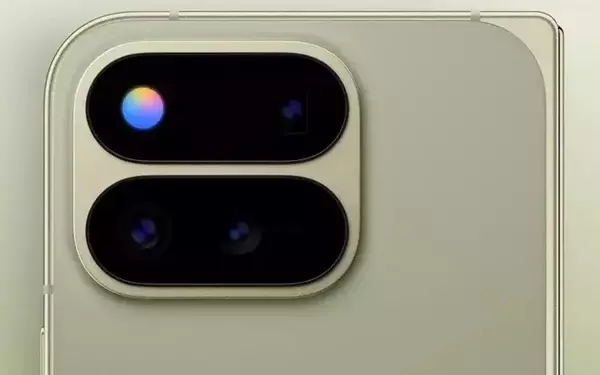
Google's latest smartphone, the Pixel 11, maintains a familiar and generally well-received aesthetic, but it disappointingly misses the mark on a critical hardware issue that has plagued its predecessors: its considerable physical heft. Despite minor improvements in thickness, the device's overall weight remains substantial, particularly when compared to its increasingly streamlined rivals. This enduring bulk is not justified by corresponding enhancements in performance, such as improved battery longevity or advanced cooling mechanisms, leaving users questioning the necessity of its size. The article highlights that while the design itself is commendable, Google's failure to significantly innovate in terms of the phone's physical dimensions or to provide a clear functional advantage for its size represents a missed opportunity in a competitive market where other manufacturers are actively prioritizing a more svelte user experience. This ongoing challenge could impact user satisfaction, especially for those seeking a more comfortable and less cumbersome daily device.
The persistent issue of the Pixel series' substantial weight and thickness has been a recurring point of contention for several generations. For instance, the Pixel 9 was already tipping the scales at nearly 200 grams, a figure that saw a slight increase with the Pixel 10, reaching 204 grams. Although the Pixel 11 introduces a modest weight reduction to 195.6 grams, it still positions the device as one of the heavier options in its category. Similarly, while the Pixel 11's thickness has been reduced to 7.6mm from the Pixel 10's 8.6mm, it still falls short of what many users expect from a modern flagship smartphone. This physical footprint becomes particularly problematic when it doesn't translate into tangible user benefits. The author posits that a heavier or thicker phone should ideally offer a superior feature set, such as a significantly larger battery capacity, a more robust cooling system to mitigate overheating issues that have historically affected Pixels, or other enhancements that justify the increased dimensions. Without such compelling trade-offs, the added bulk feels arbitrary and becomes a notable drawback in the user experience.
A key area where Google could have leveraged the Pixel's size for advantage is in its thermal management. Given that Pixel devices have frequently struggled with overheating, utilizing the internal space for a more effective cooling solution, perhaps a larger vapor chamber or more extensive graphite layers, would have been a logical and welcome improvement. However, the Pixel 11 does not appear to capitalize on its dimensions in this manner. The article also notes that while the camera visor has seen an impressive 40% reduction in thickness and now boasts an all-glass surface, this isolated improvement doesn't address the phone's overall ergonomic concerns. The author suggests that a more holistic approach to slimming down the device, or at least ensuring that its current dimensions serve a clear functional purpose, is necessary. The current situation is akin to optimizing one component while neglecting the entire system, leading to an inconsistent and ultimately less satisfying user experience.
The competitive landscape further underscores Google's challenge. Leading manufacturers like Samsung and Apple have been steadily making their flagship devices thinner and lighter. For example, the Samsung Galaxy S26 weighs 167 grams, and the iPhone 17 comes in at 177 grams. These figures starkly contrast with the Pixel 11's 196 grams, making the weight difference palpable in daily use. The author recounts personal experience, noting that even an iPhone 17 with a protective case feels lighter and more comfortable than a caseless Pixel 11, particularly during extended periods of use. This ergonomic disparity is a significant factor for users who spend hours interacting with their phones. Furthermore, adding a protective case to the Pixel 11 pushes its weight well over 200 grams, exacerbating the problem. This situation leaves users with a sense of frustration, as they bear the inconvenience of a bulky device without receiving commensurate benefits in performance or features.
The cost of the Pixel 11, at $899, adds another layer of scrutiny to its hardware shortcomings. This price point, a $100 increase from its predecessor, seems less justified when many of its specifications remain largely unchanged. The device features Google's new Tensor G6 chip but retains a very similar camera setup to the Pixel 10, including a 48MP main camera with improved light sensitivity, a 10.8MP telephoto lens with 5x optical zoom, a 13MP ultrawide camera, and a 10.5MP autofocus selfie camera. The battery capacity and charging capabilities also show no significant upgrades. While industry-wide RAM shortages are cited as a reason for price hikes, the lack of substantial hardware innovation beyond the processor makes the increased cost difficult to rationalize for consumers. This reinforces the argument that Google needs to make more significant strides in hardware development to match its pricing strategy.
Looking ahead, Google's strategy for future Pixel iterations, particularly the Pixel 12, needs to prioritize a reevaluation of its hardware philosophy. The current approach, where the device's bulk does not demonstrably contribute to a superior user experience in terms of battery life, performance, or thermal management, is unsustainable in a market that values sleek design and efficiency. While the Pixel's software experience is a strong draw, it cannot continuously compensate for hardware deficiencies. Google must either provide compelling reasons for the Pixel's size and weight by integrating substantial functional improvements or commit to a more streamlined and lighter design that aligns with industry trends and user preferences. The desire for a more balanced and ergonomically friendly device is a critical factor for retaining and attracting users, and the Pixel series' ongoing journey towards optimal hardware design is far from complete.