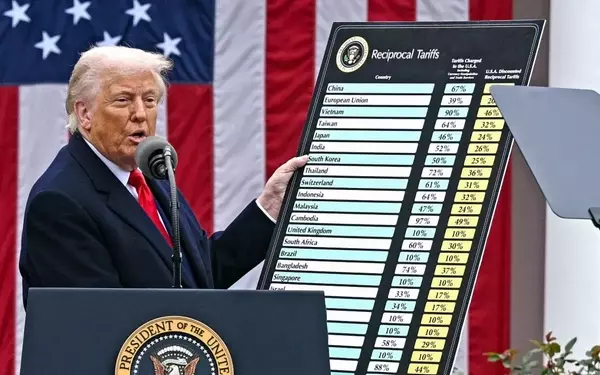
Recent economic disruptions have led to a significant shift in investor confidence regarding U.S. Treasury bonds. Historically, these bonds served as a global safe haven for investors during uncertain times. However, due to certain policy decisions, including the implementation of tariffs, there has been a noticeable decline in demand for U.S. bonds. This trend could potentially lead to increased interest payments on national debt and further economic challenges if not addressed.
This situation is exacerbated by ongoing discussions about tax reduction bills, which might hinder efforts to manage the national debt effectively. The interplay between fiscal policies and their impact on economic stability is becoming increasingly critical in shaping the future of the American economy.
Redefining Investor Confidence
Investor sentiment towards U.S. Treasury bonds is undergoing a transformation. Traditionally viewed as a reliable investment option, these bonds are now facing skepticism due to recent economic turbulence. This change stems from policy measures that have unsettled global markets, prompting a reevaluation of the U.S. dollar's role as a reserve currency.
The introduction of tariffs has played a pivotal role in altering investor perceptions. These trade restrictions have contributed to economic instability, leading many to question the safety of U.S. Treasury bonds. As a result, investors are exploring alternative assets that offer greater security and potential returns. If this trend persists, it could significantly affect the U.S. economy by increasing borrowing costs and complicating efforts to manage national debt. Furthermore, without strategic adjustments, the long-standing advantage of favorable borrowing rates enjoyed by the United States may diminish.
Potential Consequences of Fiscal Decisions
Fiscal policies currently under consideration pose additional risks to the U.S. economy. A proposed tax reduction bill could complicate efforts to address the national debt. With declining investor confidence in U.S. bonds, higher interest payments on the national debt become an inevitable consequence. This scenario underscores the urgency of revisiting current fiscal strategies to ensure long-term economic sustainability.
The implications of reduced investor confidence extend beyond immediate financial concerns. They also highlight the need for comprehensive fiscal reforms that balance short-term economic stimuli with long-term stability. The interconnection between trade policies, such as tariffs, and fiscal measures like tax reductions, reveals the complexity of modern economic governance. Policymakers must carefully consider how these elements interact to avoid exacerbating existing economic challenges. By adopting a more holistic approach to economic policy-making, the United States can restore investor trust and secure its position as a leader in global finance. Additionally, addressing the broader context of national debt management becomes crucial in maintaining economic resilience amidst evolving global dynamics.