A recent analysis by Sage Advisory Services underscores the distinct advantages of Insurance-Linked Securities (ILS) within alternative investment strategies. While many conventional alternative investments, such as private equity, private credit, and real estate, are influenced by similar economic forces like corporate earnings and financing costs, ILS offers a fundamentally different return driver. Its performance is intrinsically linked to natural disaster and insurance occurrences, rather than the broader economic landscape, presenting a truly uncorrelated asset class for investors.
Andrew Poreda, Vice President and Senior Research Analyst at Sage Advisory, articulates that ILS provides access to an entirely unique risk premium. He emphasizes that the ILS market, valued at $144.5 billion, encompasses catastrophe bonds, which represent the more visible segment, and a larger, privately negotiated reinsurance sector. These investments operate on a non-negotiable contract calendar, with valuations tested at every maturity, irrespective of market sentiment. This structural independence from economic cycles is what makes ILS a powerful tool for enhancing portfolio diversification and achieving deterministic liquidity.
The Distinct Diversification Power of ILS
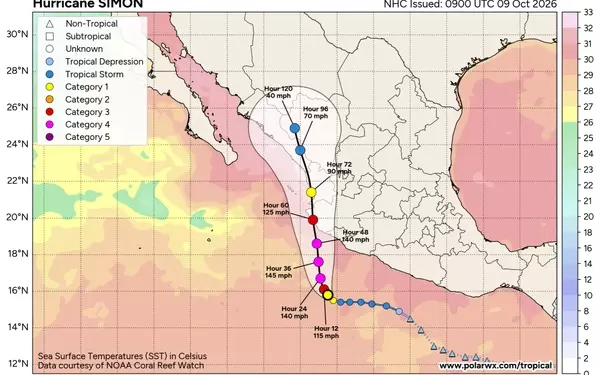
Insurance-Linked Securities stand apart from other alternative investments due to their unique correlation profile. Unlike private equity, private credit, or real estate, which are all sensitive to factors such as corporate profitability, borrowing costs, and market exit conditions, ILS derives its returns from catastrophic events. A hurricane's impact or an earthquake's tremor does not hinge on corporate earnings reports or refinancing markets, nor is a wildfire concerned with default cycles. This fundamental detachment from the business cycle means that ILS offers a genuine form of diversification, introducing independent risk drivers into a portfolio that other alternatives simply cannot provide. For investors who have broadened their alternative allocations without truly diversifying their risk exposures, ILS represents a crucial missing piece.
The report highlights that the historical performance of catastrophe bonds demonstrates this independence. Over a decade, catastrophe bonds yielded an approximate 7.0% annualized return with 4.6% volatility, boasting a 1.53 Sharpe ratio and a 2.50 Sortino ratio. Notably, cat bonds generated positive returns in roughly 79% of the months when the S&P 500 experienced declines, further solidifying their role as an uncorrelated asset. Furthermore, the inherent structure of catastrophe bonds, with defined maturity dates, ensures a clear resolution of collateral return or claims payment, dictated by a contract calendar rather than the vagaries of exit markets or refinancing windows. This characteristic provides a clear and predictable liquidity profile, a significant advantage in volatile markets.
Navigating the ILS Market and Its Strategic Integration
While ILS offers compelling diversification benefits, it is not immune to capital market dynamics. The report acknowledges that periods of record catastrophe bond issuance and strong capital inflows can lead to tighter spreads, similar to other asset classes. However, the mechanism through which these flows impact ILS differs significantly. In contrast to private credit, where managers might feel pressure to deploy capital into less attractive terms during high inflow periods, ILS managers facing unfavorable pricing can choose to hold collateral, decline renewals, and await more opportune market conditions. This flexibility, driven by the regular renewal calendar of catastrophe risk rather than deal-by-deal negotiations, provides a more transparent and manageable reflection of supply and demand forces within the market.
The private ILS market plays a substantial role, with privately negotiated structures accounting for approximately $80 billion of the total $144.5 billion market. These private contracts, often annual, also feature defined schedules for resolution, with loss determination tied to covered events rather than negotiated enterprise values. Despite its growing size and foundational role in reinsurance, ILS remains smaller than private credit, and its capacity is finite, with potential for exposure concentration by peril, region, and season. Therefore, ILS is best viewed as a complement to an existing alternatives program, rather than a replacement. The decision of how much to allocate to ILS hinges on key considerations: the proportion of existing alternatives contingent on corporate earnings or financing costs, the validation of reported portfolio values through external acquisitions, and the necessary level of liquidity. By thoughtfully integrating ILS, portfolios can move beyond simply expanding their alternative allocations to achieving genuine and meaningful diversification.