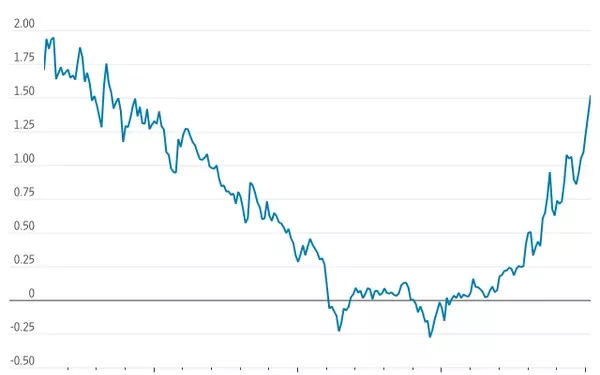
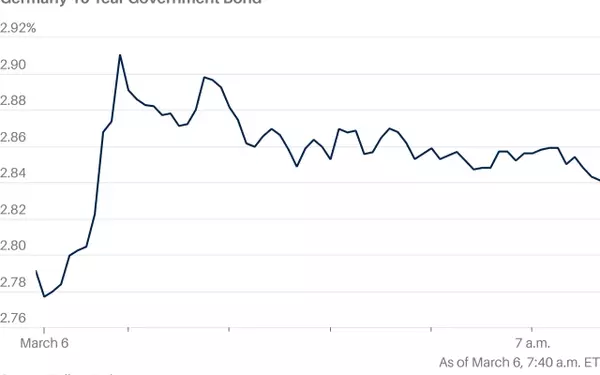
In a significant financial development, the yield on Japan's benchmark 10-year government bond reached 1.515% on Thursday, marking its highest level since June 2009. This rise was driven by market expectations of further interest rate hikes by the Bank of Japan (BOJ) and a sharp increase in German long-term bond yields. The BOJ Deputy Governor Shinichi Uchida indicated that if economic conditions align with projections, the central bank will continue to raise short-term rates. Meanwhile, discussions among parties forming Germany’s next government reportedly led to a relaxation of fiscal rules, causing a sell-off in the German bond market. Investors responded by selling Japanese government bonds to offset losses from German bonds, pushing the 10-year yield up by 0.075 percentage points from Wednesday’s close.
Detailed Reporting on the Rise in Japanese Bond Yields
In the bustling financial markets of Tokyo, a notable event unfolded as the yield on the benchmark 10-year Japanese government bond climbed to 1.500% on March 6, 2025. This milestone represents a significant shift in long-term interest rates, influenced by multiple factors converging over recent days. The previous day, BOJ Deputy Governor Shinichi Uchida hinted at the possibility of continued increases in short-term policy rates, provided the economy and inflation trends match forecasts. This statement fueled speculation about future monetary policy adjustments, impacting investor behavior.
The surge in Japanese bond yields was also linked to developments in Europe. Reports suggested that negotiations for Germany’s next government included plans to ease fiscal constraints, leading to a dramatic sell-off in German bonds. As a result, investors sought to mitigate their losses by divesting Japanese government bonds, driving the benchmark 10-year yield to its highest point in over 15 years. In January, the BOJ had already raised its policy interest rate to 0.5%, from 0.25%, anticipating robust wage growth following annual labor-management talks. BOJ Governor Kazuo Ueda has expressed readiness to consider further rate hikes, noting a gradual rise in underlying inflation.
From a broader perspective, this series of events underscores the interconnectedness of global financial markets. The actions of central banks and fiscal policies can have far-reaching effects, influencing not only domestic economies but also international markets. For investors, these fluctuations highlight the importance of staying informed and adaptable in an ever-changing economic landscape. The ongoing dialogue between policymakers and market participants will likely shape the trajectory of interest rates and bond yields in the coming months, making it crucial for stakeholders to monitor developments closely.