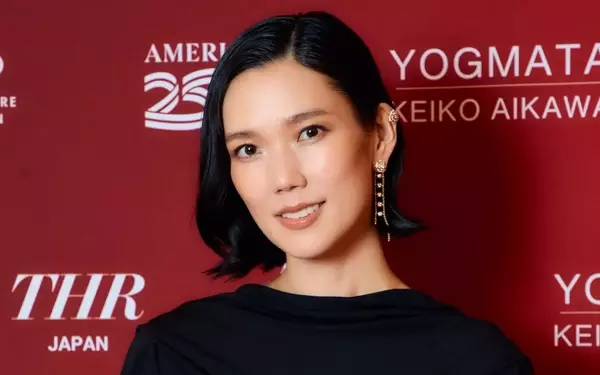
The Kering Women in Motion event in Tokyo recently served as a vibrant platform for celebrating the burgeoning global presence of Japanese cinema. Esteemed figures from the film industry convened to discuss the current landscape, future prospects, and the vital role of diversity in storytelling. The dialogue underscored a shared vision for an inclusive cinematic future.
Japanese Cinema's Global Moment: Insights from the Kering Women in Motion Tokyo Event
On October 27, 2026, at the Toho Cinemas Roppongi Hills, a distinguished panel gathered for the Kering Women in Motion event, an affiliated program of the Tokyo International Film Festival. The discussion focused on the current vitality and future trajectory of Japanese cinema. Celebrated director Kore-eda Hirokazu, known for his work on "Shoplifters," initiated the event with insightful remarks. He observed a notable shift in international film festival perceptions, noting, "In recent years, I've been hearing people at international film festivals say, 'Japanese films are really interesting right now.' That's a sentiment we didn't hear 10 years ago." He attributed this rising global interest to the dedicated efforts of a new generation of filmmakers, including Hamaguchi Ryusuke and Fukada Koji, who have successfully brought their projects to international audiences. Kore-eda emphasized the importance of the older generation's role in nurturing this momentum and ensuring its transmission to future filmmakers and audiences alike.
The panel featured prominent individuals shaping the Japanese film landscape: Ninomiya Kazunari, a renowned actor and member of the group Arashi; Murata Chieko, a successful producer; and Amy Homma, who serves as director and president of the Academy Museum of Motion Pictures and the Academy Collection. Facilitated by journalist Tatsuta Atsuko, their conversation delved into the current state and future of Japanese cinema, with a particular emphasis on fostering diversity and inclusion within the industry. Homma, identifying as a Japanese-American and Jewish-American woman, shared her perspective on cultural richness, stating, "I'm very lucky to have been raised with the awareness that multiple truths can exist at the same time." She highlighted that national cinemas, such as American, Japanese, and French, coexist with equal significance. Homma further elaborated on the power of cinema to cultivate empathy and cultural understanding, suggesting that engaging with diverse films allows individuals to comprehend experiences beyond their own. Ninomiya recounted his experiences working on international productions, including Clint Eastwood's "Letters from Iwo Jima," noting a collaborative spirit where open questioning and dialogue led to more effective solutions, a contrast to potentially more hierarchical Japanese production environments. Murata, producer of the acclaimed 2025 kabuki-themed drama "Kokuho," articulated her ambition to create universally moving stories that evoke laughter and tears. She stressed that cultural tolerance is paramount for achieving such widespread impact. Homma concluded by emphasizing the strength derived from diversity, advocating for pluralistic thinking over individualistic approaches in team settings. She expressed a desire for individuals to embrace and showcase their unique cultural backgrounds and qualities, rather than suppressing their individualism, asserting that diversity across gender, ethnicity, and age creates a truly exceptional team.
The Kering Women in Motion event underscored a crucial shift in the global appreciation of Japanese cinema, driven by a new wave of talent and a growing emphasis on diverse perspectives. The discussions highlighted that embracing varied cultural experiences and fostering inclusivity are not just ethical imperatives but also key ingredients for creating truly impactful and universally resonant storytelling. It serves as a reminder that the richness of cinema lies in its ability to bridge cultural divides and deepen our shared human understanding, making the world a more empathetic place, one film at a time.