In an era where artificial intelligence tools are proliferating at a breakneck pace, Krea, a San Francisco-based startup, has emerged as a game-changer. With its newly raised $83 million in funding, Krea aims to simplify the complex landscape of generative AI for designers and visual creatives. The platform offers a unified interface that integrates multiple AI models, empowering users with customizable tools to refine their creative output effortlessly.
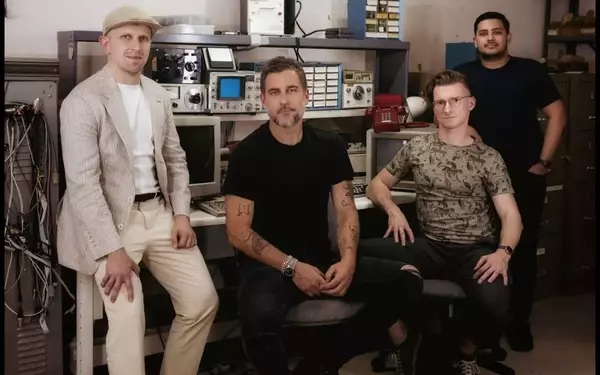
The heart of Krea's innovation lies in its ability to streamline interactions between creators and AI systems. By offering a user-friendly environment, Krea bridges the gap between technical complexity and artistic expression. Its founders, Victor Perez and Diego Rodriguez, have leveraged their backgrounds in both creativity and technology to design a solution tailored specifically for those who prioritize aesthetics over coding.
Backed by prominent investors such as Bain Capital Ventures and Andreessen Horowitz, Krea is positioning itself not merely as another AI tool but as a comprehensive platform designed to enhance human creativity rather than replace it. Through intuitive controls and seamless integration of cutting-edge models, Krea ensures that even non-experts can harness the power of AI without being overwhelmed by its intricacies.
Krea's origins trace back to Barcelona, where co-founders Perez and Rodriguez first met during their university days studying audiovisual engineering. Their shared passion for both art and science laid the groundwork for what would eventually become Krea. After pursuing careers as AI researchers, they reunited in New York City, dropping out of Cornell University to pursue their vision full-time.
Recognizing the challenges faced by designers interacting with rapidly evolving AI technologies, Krea addresses two primary concerns: the need for simplicity and adaptability. Many creatives lack the expertise required to navigate complex prompts or stay updated on model advancements. By providing a single entry point into multiple models while allowing detailed customization, Krea empowers users to focus on their ideas instead of technicalities.
Aaref Hilaly from Bain Capital Ventures highlights how Krea stays ahead of constant advancements in AI modeling. He notes that having a layer like Krea simplifies access to state-of-the-art models while maintaining ease of use. This approach aligns perfectly with Krea's mission—to amplify creativity through accessible yet powerful tools.
Beyond still images, Krea extends its capabilities into video editing and plans further expansions into audio and music generation. As the company scales up with additional enterprise features, it remains committed to preserving the delicate balance between technological sophistication and user-friendly design.
Anish Acharya from Andreessen Horowitz emphasizes the uniqueness of Krea's product philosophy. It combines rapid adaptation to advanced AI research with immediate usability, making it stand out in a crowded field. Looking forward, Krea represents more than just software; it embodies the potential for humans and machines to collaborate harmoniously in shaping tomorrow's creative landscapes.