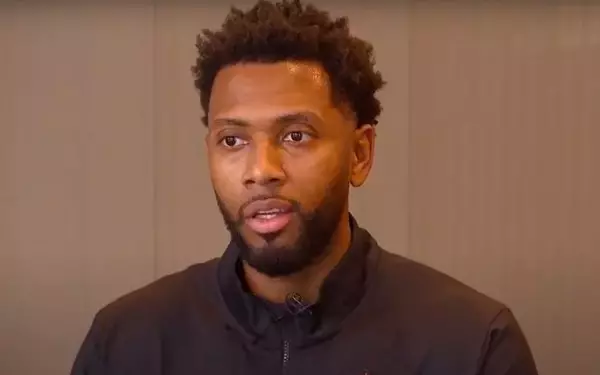
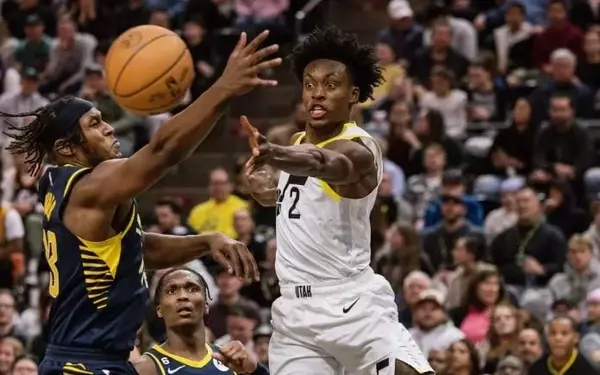
The ongoing negotiations between the Golden State Warriors and promising forward Jonathan Kuminga have reached a critical juncture, with Kuminga's camp expressing strong reservations about the proposed two-year contract structure. This contractual dispute underscores a broader theme of player agency versus team control in professional sports, as Kuminga seeks a deal that provides him greater autonomy over his career trajectory. The situation has implications not only for Kuminga's future but also for the Warriors' strategic team building, particularly given his increasingly pivotal role on the court.
Contractual Hurdles: Kuminga and the Warriors' Tug-of-War
In a developing story from the vibrant world of professional basketball, Jonathan Kuminga, the dynamic 22-year-old forward for the esteemed Golden State Warriors, finds himself engaged in a intricate dance of contract negotiations. The Golden State franchise has tabled a proposition for a two-year, approximately $45 million agreement, notably including a team option for the second season. However, sources close to Kuminga's representation, as reported by ESPN's Anthony Slater, reveal a firm resistance to this specific clause. Kuminga's desire leans towards a player option, a mechanism that would afford him greater personal discretion and control over his professional future.
The underlying sentiment within Kuminga's inner circle, according to Slater, is a feeling of being a "pawn" in the team's long-term strategy. This apprehension stems from the belief that a team option could potentially transform him into a valuable mid-season trade asset, rather than solidifying his position as a foundational piece for the team's future. Despite Kuminga's clear preference, the Warriors have, to date, demonstrated an unwavering stance, showing no inclination to alter the foundational structure of their proposed deal.
Amidst this contractual stalemate, Kuminga is reportedly weighing a significant alternative: accepting his one-year qualifying offer, valued at $7.9 million. This strategic move, while entailing a substantial deferral of future earnings from the current multi-year offer, would crucially grant him unrestricted free agency in the subsequent summer. Furthermore, such a one-year agreement would feature a no-trade clause, providing him immediate security against any mid-season relocations. Observers within the league acknowledge this as a calculated risk for Kuminga, as it would mean foregoing a guaranteed $14 million salary for the 2025-26 season in pursuit of greater personal freedom.
Simultaneously, the Golden State front office has been receptive to inquiries regarding potential sign-and-trade scenarios involving Kuminga. Nevertheless, their demands have been conspicuously high, reportedly encompassing a young, promising player and a coveted first-round draft pick. To date, these stringent conditions have not been met by any interested parties. While the Sacramento Kings have reportedly shown preliminary interest, the Brooklyn Nets, previously considered a strong contender for Kuminga's services, have seemingly tempered their pursuit. Kuminga's recent season showcased his escalating value, as he delivered an impressive average of 15.3 points and 4.6 rebounds, carving out an increasingly vital role in Head Coach Steve Kerr's strategic rotations, particularly in the absence of veteran stalwarts like Stephen Curry, Jimmy Butler, and Draymond Green.
Navigating the Modern NBA Landscape: Power Dynamics and Player Autonomy
The unfolding saga between Jonathan Kuminga and the Golden State Warriors offers a compelling lens through which to examine the ever-evolving power dynamics within the contemporary NBA. This situation transcends a mere contract negotiation; it is a vivid illustration of a rising generation of athletes who are acutely aware of their market value and increasingly assertive in shaping their professional destinies. Kuminga's insistence on a player option over a team option speaks volumes about a desire for long-term control and stability, rather than being perceived as a transactional asset. This trend empowers players, enabling them to make choices that align with their personal and career aspirations, even if it means deferring immediate financial gains for future strategic advantages. For teams, it presents a challenge to balance competitive aspirations with the need to foster trust and commitment from their most promising talents. Ultimately, such standoffs reflect the intricate balance of power and the continuous negotiation of terms in the high-stakes environment of professional sports.