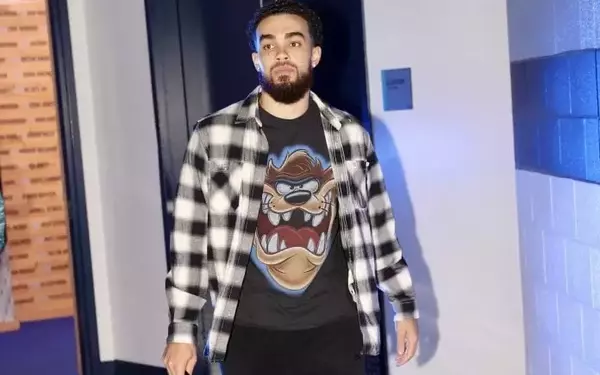
In a recent commentary that has stirred considerable discussion, former NBA professional Kwame Brown articulated his skepticism regarding the heightened attention surrounding Bronny James, son of basketball icon LeBron James. Brown suggested that numerous high school players demonstrate superior abilities compared to the younger James, raising questions about the factors contributing to his prominent position in the basketball world.
Former NBA Star Questions Bronny James's On-Court Merits Amidst \"Politics in Sports\" Debate
During a candid segment on his podcast, as reported by HoopsHype, Kwame Brown asserted that Bronny James, now in his second year in the professional circuit, is not performing at a level commensurate with the fanfare. Brown highlighted a particular preseason game where Bronny attempted twelve shots, despite allegedly never being the top player on any of his previous high school or collegiate teams. He posited that the underlying \"politics\" within sports might be a significant factor in Bronny's continued access to high-level opportunities, overshadowing the merit of other burgeoning talents.
Bronny James was notably drafted by the Los Angeles Lakers as the 55th overall pick in the 2024 NBA Draft, a move that historicized the league by uniting him with his father, LeBron James, as the first-ever father-son playing duo. Throughout his debut season, Bronny divided his time between the Lakers and their G League affiliate, the South Bay Lakers, where he showcased moments of potential, including a remarkable 39-point game in March 2025. His assignments to the G League have also provided him with valuable development, averaging 21.9 points, 5.1 rebounds, and 5.5 assists over eleven appearances.
Kwame Brown's critique, however, focuses on the perceived disparity between Bronny's on-court achievements and the scale of his opportunities. This perspective reignites conversations about nepotism, media influence, and the criteria for success in professional sports, particularly when a rising athlete comes from a legendary lineage.
This discussion initiated by Kwame Brown offers a compelling lens through which to examine the dynamics of talent, opportunity, and external factors in professional sports. It challenges observers to consider whether an athlete's lineage and connections unduly influence their career trajectory, potentially overshadowing other equally or more skilled individuals. It serves as a reminder that the path to professional recognition is complex, often intertwined with narratives beyond pure athletic prowess, and urges a closer look at equitable evaluation in competitive arenas.