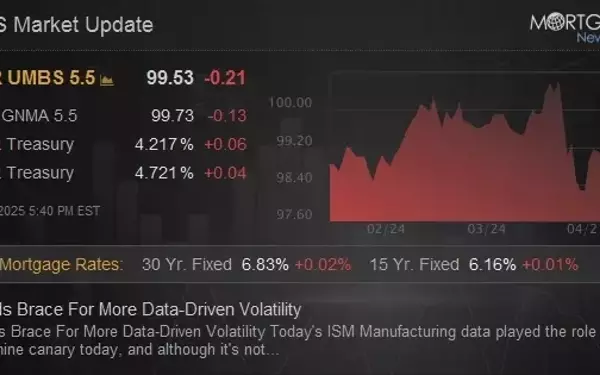
In recent weeks, the market has been dominated by tariff-related news. However, subtle shifts have emerged, highlighting a renewed focus on economic indicators. Two weeks ago, a significant clue came from price data within the S&P Manufacturing PMI report, which reversed an early rally after comments regarding Powell's position. Today’s ISM PMI release was highly anticipated but did not mirror the earlier S&P increase. Despite this, bond markets reacted unfavorably. The components of today's data exceeded expectations, showcasing a complex interplay between various factors.
These two PMI reports, spaced out over the past fortnight, have driven substantial spikes in Treasury futures volumes. This highlights their pivotal role in shaping market sentiment and trading activity.
Economic Indicators Regain Influence
Recent developments indicate that economic data is reclaiming its influence over market movements. Although tariff discussions have dominated headlines, specific data points like those from the S&P Manufacturing PMI have begun to shift investor attention. The notable reversal of a morning rally underscores the impact of these figures, even amidst geopolitical uncertainties.
The dynamics observed suggest that investors are increasingly attuned to nuanced economic signals. Two weeks ago, the S&P Manufacturing PMI hinted at changing conditions with its price data. This information not only influenced immediate trading patterns but also set the stage for subsequent reactions. As traders awaited the ISM PMI, anticipation built, reflecting the significance of such reports in guiding investment strategies. The fact that bonds reacted negatively despite discrepancies in the PMI data highlights the broader context in which these metrics are interpreted. Investors appear to be scrutinizing multiple aspects of the data, rather than focusing solely on one component.
Market Volatility Linked to PMI Reports
PMI reports have become key drivers of volatility in Treasury futures markets. The substantial volume spikes associated with both the S&P and ISM releases demonstrate their critical role in determining short-term market trends. These reports serve as essential barometers for assessing economic health, influencing everything from bond yields to stock prices.
The latest ISM PMI data exemplifies how varying interpretations can affect market sentiment. While it failed to replicate the jump seen in the S&P version, the overall positive movement in other components still triggered notable reactions. This complexity illustrates the challenge faced by traders in deciphering conflicting signals. Moreover, the heightened trading activity around these releases suggests that they are viewed as reliable indicators of future economic performance. In turn, this reliance amplifies their impact on financial markets, making them focal points for strategic decision-making. As market participants continue to evaluate the interplay between economic data and broader trends, the importance of PMI reports remains undiminished.