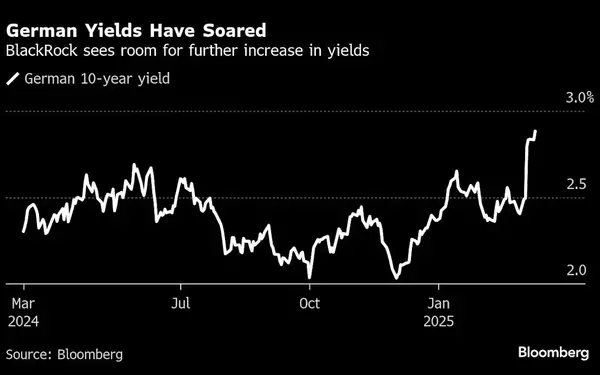
The dynamics in the global financial markets have undergone a significant transformation, with investors now expressing greater concern over lower-rated US companies compared to their European equivalents. This shift is reflected in the widening premium demanded by investors for holding US junk-rated debt, which has surged to around 340 basis points, while European spreads have tightened to about 320 basis points. The reversal in market sentiment is attributed to concerns over the impact of tariffs on the US economy and the ambitious fiscal plans in Europe, particularly Germany's commitment to defense and infrastructure spending.
Meanwhile, this trend extends beyond fixed income markets, influencing equities as well. The S&P 500 has seen a decline of nearly 5% this year, contrasting sharply with the approximately 7% rise in European stocks. Certain sectors within the US high-yield index, such as renewable energy and discretionary retail, have been hit hard, while European sectors like real estate and retail have gained momentum. The primary bond market in the US has also faced delays, with several companies reconsidering their issuance plans due to economic uncertainties.
Changing Perceptions of Risk in US and European Markets
The divergence in investor sentiment between the US and European markets has become increasingly pronounced. Historically, US junk bonds enjoyed tighter spreads, driven by optimism over tax cuts and deregulation under the previous administration. However, recent economic indicators suggest a slowdown in the US, leading to wider spreads. In contrast, European spreads have narrowed, reflecting renewed confidence in the region’s economic outlook.
This shift can be traced back to the implementation of protective trade policies in the US, which have raised concerns about potential economic repercussions. Meanwhile, European countries, especially Germany, have introduced substantial fiscal measures aimed at boosting defense and infrastructure. These initiatives are expected to stimulate economic growth and improve business conditions across the continent. Investors are now more inclined to favor European assets, viewing them as less risky compared to their US counterparts. The changing dynamics have prompted a reevaluation of investment strategies, with many fund managers adjusting their portfolios accordingly. For instance, some are increasing their exposure to European bonds in sectors that stand to benefit from increased government spending, such as chemicals, equipment leasing, and infrastructure. The turnaround in European junk bonds has been dramatic, with previously distressed companies seeing improvements in their credit profiles.
Implications for Corporate Bond and Equity Markets
The unwinding of the 'America First' trade has had far-reaching effects on both corporate bond and equity markets. The S&P 500's decline underscores growing pessimism about the US economy, while European stocks have benefited from positive economic news. Sectors most affected in the US include renewable energy and discretionary retail, where performance has lagged. Conversely, European sectors poised to gain from broader economic boosts, such as real estate and retail, have performed well. Additionally, industries set to benefit from military spending increases are attracting investor interest.
The impact on the primary bond market is equally notable. Several US companies are reconsidering their bond issuance plans amid economic uncertainties, with some delaying or even withdrawing transactions. In contrast, European primary markets continue to function smoothly, with multiple deals launched or priced recently. The disparity highlights the diverging economic trajectories between the two regions. While US credit spreads remain relatively stable, the potential for a recession looms large. On the other hand, Germany's fiscal stimulus could provide a much-needed boost to Europe's traditionally sluggish economic growth. Credit strategists have adjusted their outlooks, becoming more optimistic about European high-yield bonds compared to US ones. This structural change in Europe presents new opportunities for investors seeking safer havens in an uncertain global landscape.