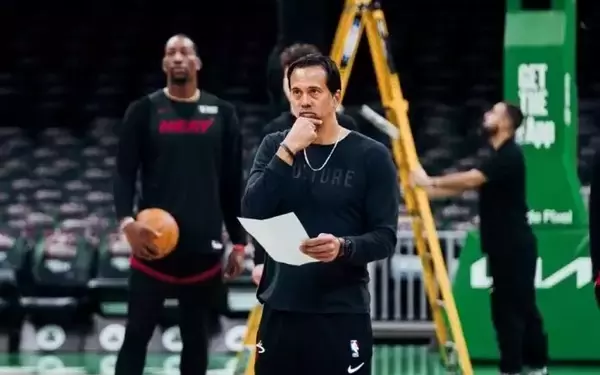
Following a challenging 2024-25 season, which included a highly publicized trade request from star player Jimmy Butler, the Miami Heat organization is strategically pivoting its team-building efforts. The franchise is now prioritizing the acquisition of talent through trades rather than relying on the traditional free agency market. This represents a significant evolution in their approach, contrasting sharply with the early 2010s era when the Heat famously attracted superstar free agents to construct a championship-caliber team.
Heat Redefines Roster Strategy Amidst NBA's Evolving Landscape
In a notable strategic adjustment, the Miami Heat has decided to concentrate its efforts on the trade market to bolster its roster, moving away from a primary reliance on free agency. This shift comes after a turbulent 2024-25 season, highlighted by Jimmy Butler's request to be traded. According to insider reports from Ira Winderman of The South Florida Sun Sentinel, the organization believes that carefully executed trades offer the most viable path to regaining elite competitive status.
This new direction diverges from the highly successful blueprint established in the early 2010s by team president Pat Riley. At that time, the Heat made headlines by securing marquee free agents such as LeBron James and Chris Bosh in the summer of 2010. Their arrival, alongside Dwyane Wade, propelled the team to four consecutive NBA Finals appearances and two triumphant championships. However, the contemporary NBA environment presents different challenges and opportunities.
While Jimmy Butler himself initially joined the Miami roster through a sign-and-trade agreement during free agency, the Heat has shown an increasing inclination towards trades as a fundamental method of team construction in recent years. This inclination continued into the current offseason with the successful multi-team transaction that brought veteran guard Norman Powell from the Los Angeles Clippers to Miami.
The league's dynamics are continually shifting, with a growing trend of fewer prominent players reaching unrestricted free agency and more teams utilizing trades to reshape their lineups. The Miami Heat's strategic realignment reflects an astute adaptation to these evolving conditions, as they place their trust in the trade market to assemble a formidable squad capable of contending for a championship once more.
From a journalist's perspective, this strategic shift by the Miami Heat highlights a fascinating evolution in professional sports team management. It underscores the adaptive nature required to succeed in a dynamic league like the NBA, where player movement and team-building strategies are constantly being re-evaluated. The Heat's decision reflects a pragmatic understanding that the traditional avenues for acquiring top talent may no longer be the most effective. It will be compelling to observe how this trade-centric philosophy impacts their immediate future and whether it sets a new precedent for other franchises navigating similar challenges in their quest for competitive dominance.