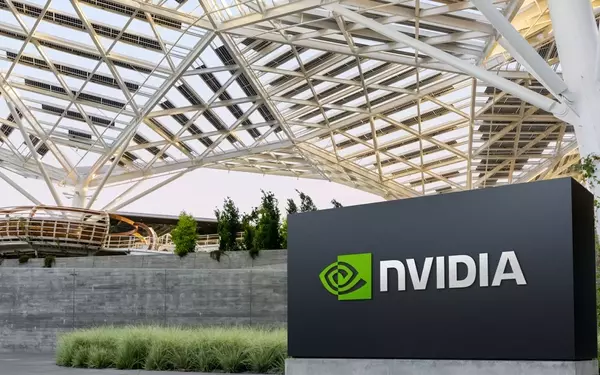
Investor Michael Burry, renowned for his accurate prediction of the housing market's downturn, has expressed a persistently bearish outlook on artificial intelligence (AI) stocks and the broader market. His portfolio reflects this sentiment, including short positions against major tech companies like Nvidia, Micron, Palantir, and Tesla, along with a significant short bet against the iShares Semiconductor ETF, signaling a comprehensive skepticism towards the AI infrastructure sector. Recently, Burry intensified his warnings, drawing parallels between the current market climate and the infamous 1987 Black Monday crash, which saw the Dow Jones Industrial Average plummet a record 22.6% in a single day. Historical factors contributing to the 1987 crash, such as a prolonged bull market, rising interest rates, geopolitical tensions, the advent of computerized trading, and cascading selling strategies, resonate with some contemporary market conditions. However, many analysts argue that modern market safeguards, including circuit breakers designed to halt trading during severe declines, make a repeat of such an abrupt and deep crash less probable. Furthermore, the robust growth and rapid return on investment in AI chip and networking hardware continue to fuel aggressive infrastructure spending by hyperscale companies, while most AI-related stocks maintain reasonable valuations.
Given this complex and often contradictory market landscape, a pragmatic investment strategy for the average investor involves consistently investing in broad market index exchange-traded funds (ETFs) through dollar-cost averaging. This disciplined approach, which entails investing a fixed amount regularly regardless of market fluctuations, has historically proven effective for long-term wealth accumulation. The success of this strategy is largely attributable to the inherent design of market-cap-weighted indexes, which naturally favor strong-performing companies and allow weaker ones to decline, effectively implementing a 'survival of the fittest' dynamic. This mechanism has consistently delivered favorable returns over extended periods. Even during earlier periods this year when AI infrastructure stocks experienced pullbacks, the S&P 500 index demonstrated resilience, with new market leaders, such as Apple, emerging to sustain its performance. This highlights the benefits of diversification and the adaptive nature of broad market indexes.
The Enduring Appeal of the Vanguard S&P 500 ETF
For investors seeking a robust and broadly diversified portfolio, the Vanguard S&P 500 ETF (VOO) stands out as an exceptional choice. Few actively managed funds have consistently managed to outperform the S&P 500 Index over the long run, making a low-cost ETF mirroring this index a smart strategic decision. By regularly investing through dollar-cost averaging into VOO, individuals gain immediate exposure to 500 of the largest and most influential U.S. corporations.
This ETF has a proven track record of strong performance, delivering an average annual return exceeding 15% over the past decade. Its inherent diversification across various sectors and industries makes it a foundational component for any long-term investment strategy. Given its historical consistency and broad market representation, if an investor were to select only one ETF, the Vanguard S&P 500 ETF would be a highly recommended option for building enduring wealth.
Leveraging Growth with the Invesco QQQ Trust
Another compelling ETF option for investors employing a dollar-cost averaging strategy is the Invesco QQQ Trust (QQQ). This ETF tracks the Nasdaq 100 Index, which is heavily concentrated in growth and technology stocks. These sectors have been primary drivers of market appreciation over the last two decades, making QQQ an attractive vehicle for long-term growth.
While QQQ offers less diversification compared to the S&P 500, its performance has been stellar, consistently outperforming the S&P 500 on a 12-month rolling basis in 88% of instances over the past decade. It has achieved an impressive average annual return of 20.4% over the last ten years, a figure that is difficult to surpass. With technological innovation continuing at a rapid pace, the Invesco QQQ Trust is well-positioned to maintain its strong performance and potentially deliver significant returns in the coming decade.