During NVIDIA’s GTC conference, the tech giant unveiled a series of announcements centered on its pivotal role in advancing autonomous driving technology. The company offers automakers and AV firms a suite of tools to power self-driving cars and create factory digital twins. Major companies like Torc, Gatik, General Motors, and others have announced plans to leverage NVIDIA products for everything from vehicle production to robotics and automated driving systems. Alongside these partnerships, NVIDIA introduced Halos, an AI-powered safety system designed for AVs and future physical AI applications.
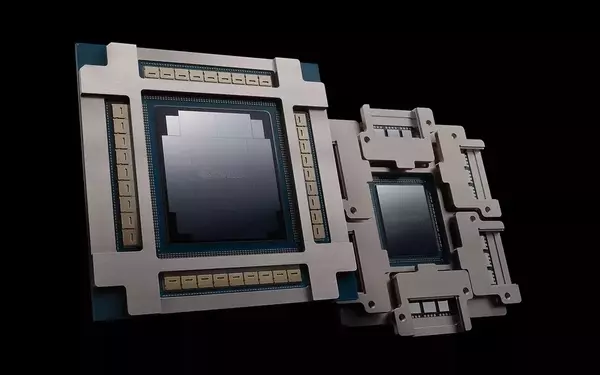
In addition to unveiling new collaborations, NVIDIA also showcased its comprehensive lineup of hardware and software solutions, including Drive AGX, Drive Orin SoC, Drive Thor SoC, DriveOS, Omniverse, and Cosmos. These tools collectively support real-time sensor data processing, advanced autonomy levels, virtual environment simulations, and world model training. Notably, GM expanded its partnership with NVIDIA to integrate Omniverse into factory operations and AV development, while Volvo utilized NVIDIA GPUs for aerodynamic simulations.
Partnerships Driving Autonomous Vehicle Progress
Through strategic alliances, NVIDIA is propelling advancements in autonomous driving across multiple industries. Companies such as General Motors, Gatik, and Torc are leveraging NVIDIA’s cutting-edge tools to enhance their capabilities in manufacturing, robotics, and AV deployment. GM specifically aims to revolutionize factory processes using Omniverse and Cosmos, enabling digital twins and AI-driven robotics platforms. Meanwhile, Gatik employs Drive AGX and Drive Thor to accelerate Level 4 autonomous truck deployments, and Torc focuses on scalable compute systems for AVs.
The collaboration between NVIDIA and leading automotive companies exemplifies how integrated technology can transform traditional workflows. For instance, GM utilizes Omniverse not only to simulate next-generation factories but also to optimize material handling through robotic training. Similarly, Gatik harnesses the power of Drive AGX and Drive Thor to establish robust AI frameworks for its fleet of autonomous box trucks. Furthermore, Torc collaborates with Flex to develop automotive-grade compute platforms powered by NVIDIA chip architectures, aiming for commercial readiness by 2027. Each partnership highlights distinct use cases where NVIDIA’s technologies streamline operations and enhance safety features.
Technological Advancements Powering Future Mobility
Beyond partnerships, NVIDIA continues to innovate with groundbreaking tools that redefine mobility standards. Products like Drive Orin SoC, Drive Thor SoC, and Halos represent significant strides toward achieving higher levels of autonomy and ensuring safer journeys. Drive Orin processes complex sensor data necessary for Level 4 autonomy, whereas Drive Thor extends capabilities to include cockpit functions and infotainment systems. Halos integrates various safety solutions under one umbrella, offering comprehensive protection for both AVs and humanoid robots.
NVIDIA’s commitment to pushing boundaries is evident in its introduction of Cosmos for world model training and Omniverse for simulating intricate environments. These platforms empower manufacturers to generate synthetic data, test AV software, and refine designs without physical constraints. Additionally, Plus, another autonomous trucking startup, leverages Cosmos foundation models to expedite SuperDrive development, showcasing the versatility of NVIDIA’s offerings. By combining generative AI and visual language models, companies can achieve superior sensor fusion and onboard computation, essential for advanced autonomy. Overall, NVIDIA’s technological innovations provide a solid foundation for realizing the future of mobility, balancing performance with safety considerations.