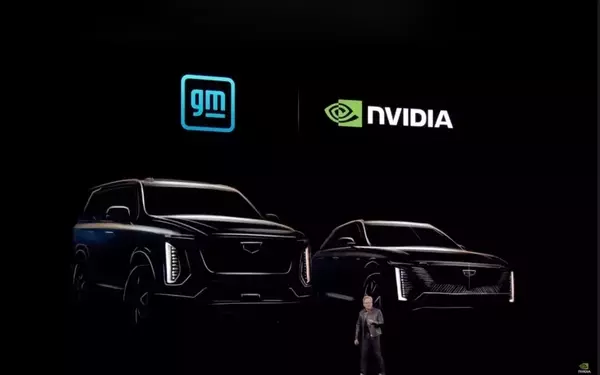
At the recent Nvidia GTC conference in San Jose, CEO Jensen Huang introduced a series of advanced GPUs set to revolutionize artificial intelligence and computing power over the next few years. Among these is Vera Rubin, scheduled for release in late 2026, which promises substantial improvements in memory and performance compared to its predecessor, Grace Blackwell. The lineup also includes Rubin Ultra, planned for 2027, offering up to 100 petaflops of performance, and Feynman GPUs, named after physicist Richard Feynman, expected by 2028.
A Leap Forward in Computing Power
In the heart of tech innovation during a vibrant autumn season, Nvidia's CEO Jensen Huang took the stage at the GTC 2025 conference in San Jose to present an impressive array of upcoming GPUs. One highlight was Vera Rubin, anticipated for release in the latter half of 2026. This new model will boast tens of gigabytes of memory and incorporate a specially designed CPU from Nvidia called Vera. Compared to its predecessor, Grace Blackwell, Vera Rubin offers significantly enhanced performance, particularly in AI inferencing and training tasks.
Vera Rubin technically comprises two GPUs in one package and can achieve up to 50 petaflops while running AI models, surpassing the current Blackwell chips' capability of 20 petaflops. Moreover, the Vera CPU doubles the speed of the CPU used in Grace Blackwell. Following Rubin will be Rubin Ultra in 2027, consisting of four GPUs in a single unit, delivering up to 100 petaflops of performance. Additionally, Nvidia plans to launch Blackwell Ultra by the end of 2025, providing various configurations with a single Ultra chip offering the same 20 petaflops of AI performance as Blackwell but with increased memory capacity.
Gazing further into the future, Nvidia has announced the Feynman GPUs, inspired by American theoretical physicist Richard Feynman, slated for release in 2028. Although limited details were disclosed about Feynman’s architecture, it will include the Vera CPU, continuing Nvidia's tradition of cutting-edge technology advancements.
As a journalist covering this event, it's clear that Nvidia's commitment to pushing the boundaries of computational capabilities will redefine what's possible in AI and high-performance computing. These developments not only promise to enhance data processing speeds but also open doors to unprecedented opportunities in scientific research, autonomous systems, and beyond. The tech world eagerly awaits the tangible impacts of these innovations on our daily lives and industries worldwide.