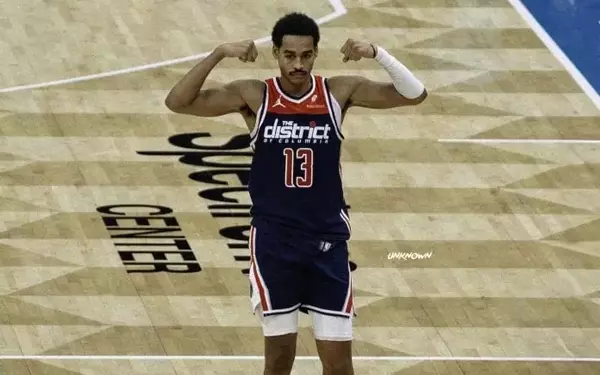
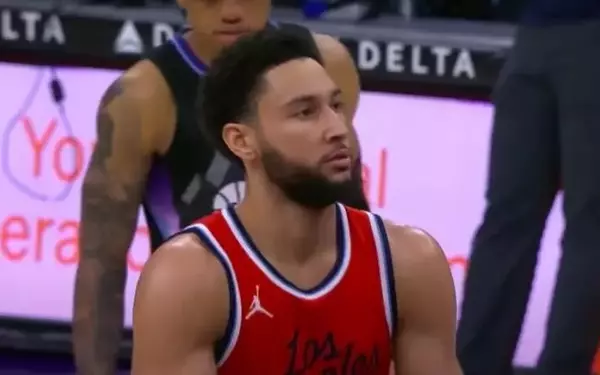
The Detroit Pistons have officially secured shooting guard Colby Jones on a two-way contract, a move that provides the promising young player with a new opportunity in the league. This development follows Jones's recent stint with the Washington Wizards and his subsequent waiving by the Oklahoma City Thunder. His journey to the Pistons underscores the dynamic nature of NBA rosters and the continuous pursuit of talent by teams looking to bolster their lineups with adaptable players.
Jones's signing is particularly significant for the Pistons, as it fills an open two-way slot, allowing them to further develop his skills while maintaining roster flexibility. His previous performance, especially with the Wizards, demonstrated his potential impact, making this acquisition a strategic step for Detroit as they aim to cultivate emerging talent alongside their existing two-way players, Ron Harper Jr. and Tolu Smith.
Colby Jones Joins Detroit on a Two-Way Contract
The Detroit Pistons have officially brought free agent shooting guard Colby Jones into their fold, signing him to a two-way contract. This move, reported by ESPN's Shams Charania, provides Jones with a crucial opportunity to continue his NBA career after a period of significant transitions. At 23 years old, Jones is seen as a player with considerable upside, and this two-way deal signifies the Pistons' commitment to fostering his development while providing him with a pathway to potentially earn a standard NBA contract in the future. The agreement allows Jones to split his time between the Pistons' main roster and their G-League affiliate, offering him valuable playing time and experience.
Jones's recent basketball journey saw him make notable contributions during the latter part of the 2023–24 season with the Washington Wizards. He was acquired by the Wizards as part of a three-team trade, having initially started his professional career with the Sacramento Kings, who drafted him 34th overall in the 2023 NBA Draft. During his 15 games with Washington, Jones displayed his versatility and potential, averaging 8.7 points, 4.3 rebounds, and 2.5 assists per game. His shooting splits were respectable, hitting 46.6% from the field, 30.8% from three-point range, and 65.7% from the free-throw line, all while playing an average of nearly 26 minutes per contest. This consistent performance demonstrated his ability to contribute across multiple facets of the game, making him an attractive prospect for teams seeking depth and emerging talent. Following his time in Washington, Jones was traded to the Oklahoma City Thunder in June, but they subsequently waived him, declining his non-guaranteed $2.22 million salary for the upcoming season, which ultimately paved the way for his signing with the Pistons. This marks Jones's first experience on a two-way contract, having previously been on standard NBA deals, highlighting a new phase in his professional development.
Strategic Roster Building and Player Development
The acquisition of Colby Jones on a two-way contract is a strategic decision for the Detroit Pistons, reflecting their approach to roster construction and player development. With an open spot among their three allotted two-way contract positions, the Pistons were able to add Jones without needing to release or waive any other players. This flexibility is key for NBA teams, enabling them to bring in promising talent that can be nurtured within their system while managing salary cap considerations and roster limits. Jones joins Ron Harper Jr. and Tolu Smith as the Pistons' current two-way players, indicating a concerted effort by the team to invest in young athletes who can grow with the franchise and potentially become integral parts of their long-term plans.
This signing aligns with the broader trend in the NBA where two-way contracts serve as vital tools for player development and team building. For players like Jones, these contracts offer a chance to prove themselves at the highest level, gaining valuable experience both in the NBA and the G-League. The opportunity to play significant minutes, refine their skills, and adapt to the professional game environment is invaluable for their growth. The Pistons, by adding Jones, are not just bringing in a player with proven recent performance but also a versatile guard who can contribute in various areas of the game. His statistics with the Wizards—averaging 8.7 points, 4.3 rebounds, and 2.5 assists over 15 games—underscore his capability to be a multidimensional asset. The focus for Detroit will now be on integrating Jones into their system, leveraging his talents, and helping him further develop his game, particularly his shooting efficiency from beyond the arc. This deliberate approach to talent acquisition and development is crucial for teams aiming to build a competitive and sustainable roster in the demanding landscape of the National Basketball Association.