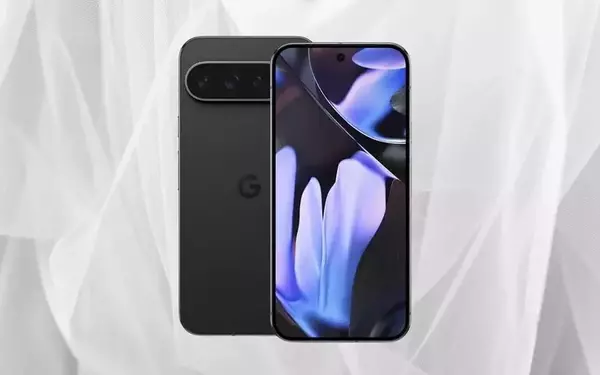
Google's Pixel series has consistently championed software innovation, particularly in AI features and computational photography. However, this focus has often come at the expense of hardware advancements, leaving many users questioning if the upcoming Pixel 11 will finally address these long-standing shortcomings. Concerns revolve around critical areas such as charging capabilities, battery longevity, processor performance, and camera technology, which appear to be falling behind rival flagship devices. The current trajectory suggests that while software enhancements are anticipated, substantial hardware upgrades might remain elusive, potentially impacting the Pixel 11's appeal in a fiercely competitive market.
For years, Pixel users have pointed out areas where hardware could see significant improvement. Charging speeds, for instance, have been a perennial issue. While competitors are pushing 60W or higher, with some even achieving full charges in under 40 minutes, the Pixel's charging speeds, reportedly capped at 37W for XL models and 27W for smaller devices, feel increasingly outdated. The adoption of silicon-carbon battery technology by other manufacturers, enabling capacities upwards of 7,000mAh, highlights a widening gap in battery life, with Pixel's rumored 4,840mAh to 5,000mAh cells appearing modest in comparison.
The Tensor G6 processor, despite anticipated CPU improvements with its new Arm C1-Ultra and C1-Pro cores, is still projected to trail Apple, Qualcomm, and MediaTek in peak performance and sustained graphics. This performance deficit is not only critical for demanding applications and gaming but also for on-device AI processing and advanced computational photography features. While Google is reportedly enhancing its TPU for AI, this might be insufficient if it compromises overall graphics capabilities. The reliance on software to compensate for hardware limitations, while successful in the past, risks alienating users who expect top-tier hardware for premium prices.
Camera hardware also presents a significant point of concern. While Pixel cameras are renowned for their color science and HDR, competing devices from Chinese manufacturers are introducing impressive hardware, including 200MP telephoto lenses and 6x optical zoom. The Pixel 11's expected upgrades—a new 50MP primary sensor for the baseline model and revamped 48MP ultrawide and telephoto lenses for Pro variants—are seen as incremental rather than revolutionary. Features like the rumored 'Pixel Glow,' a decorative RGB LED ring, raise questions about Google's hardware priorities when rivals are focused on substantial photographic advancements. The potential reduction in RAM options for the Pixel 11 and Pixel 11 Pro Fold is another worrying sign, especially given the increasing memory demands of advanced on-device AI models.
The prevailing sentiment among many is that the Pixel 11 series, if current leaks prove accurate, will continue Google's pattern of emphasizing software over hardware. This approach has yielded strong AI features and excellent cameras, yet it leaves the Pixel lagging behind in crucial hardware aspects like charging speed, battery capacity, and raw processing power. In a rapidly evolving premium smartphone market, where rivals are making significant strides in hardware innovation, Google's incremental updates may not be enough to satisfy users who demand a device that excels in all aspects. The Pixel 11 will likely be a capable smartphone, but whether 'capable' is sufficient to stand out in today's competitive landscape remains to be seen.