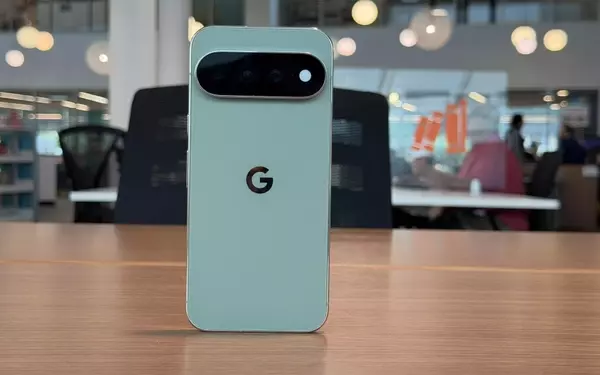
In a significant shift for its flagship smartphone line, Google's new Pixel 11 series has adopted MediaTek modems, abandoning the Samsung components used in previous iterations. However, contrary to burgeoning online discussions, Google has definitively stated that these new devices will not feature Dual-SIM Dual-Active (DSDA) support. This revelation comes after weeks of speculation within tech communities, with official confirmation solidifying that the Pixel 11 models will operate in a Dual-SIM Dual Standby (DSDS) configuration, despite the new hardware's theoretical capabilities.
Online communities, particularly on platforms like Reddit, were rife with rumors suggesting that the Pixel 11 could offer true DSDA functionality, allowing users to maintain a high-speed data connection on one network while simultaneously engaging in a voice call on another. This potential capability stirred considerable excitement among enthusiasts. Nevertheless, Google's recent communication with Android Authority has put these speculations to rest, confirming that the Pixel 11 lineup strictly adheres to the DSDS standard.
Before Google's official announcement, extensive internal diagnostics and rigorous real-world network testing were conducted on the Pixel 11 Pro XL. These investigations unveiled critical hardware changes, most notably the departure from Samsung's modem technology. A key indicator of this change was the device's baseband firmware string, which displayed an 'a900a' prefix. Historically, Pixel phones equipped with Samsung Exynos modems utilized a 'g' prefix, making the shift to 'a900a' a strong signal of a transition to MediaTek components. Further verification through Android Debug Bridge (ADB) queries confirmed an explicit 'MTK' (MediaTek) architecture string, solidifying the transition from Samsung modems in Google's wireless infrastructure.
The modem software itself provided additional clues, with the Radio Interface Layer (RIL) identifying as 'MTK-t900' and Google's internal logging service dubbed 'AlcedoT900'. These identifiers, coupled with the 'a900a' baseband previously linked to MediaTek's M90 modem, strongly suggest the Pixel 11 Pro XL is utilizing this platform. Despite the new MediaTek modem's inherent ability to support DSDA, Google's confirmation highlights that this feature is not enabled on the Pixel 11 Pro XL. This indicates that the limitation is not due to the modem's hardware, but rather a deliberate configuration choice by Google, either at the software or hardware integration level. Consequently, users with multiple eSIMs on their Pixel 11 Pro XL can only utilize one active line at any given time.
For individuals who rely on two separate numbers on their Pixel 11 Pro XL and wish to avoid interruptions to their data during ongoing calls, a practical solution exists. Users can navigate to their network settings and activate the 'Switch mobile data automatically' option. This functionality acts as a temporary measure, redirecting data traffic to the currently active voice line, thereby mitigating the impact of Google's imposed limitation. This workaround provides a necessary patch for a constraint that Google has now firmly established within the Pixel 11 series.