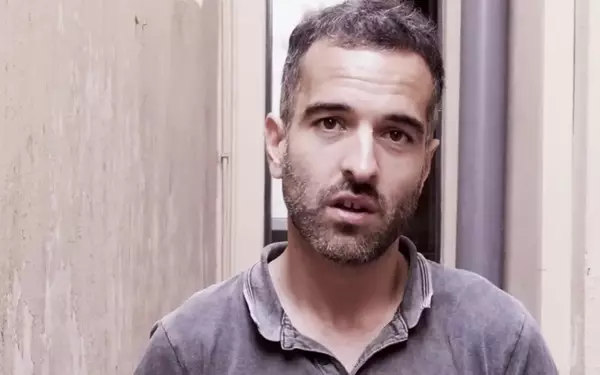
Ricardo Darín, a prominent figure in Argentine cinema, recently discussed his new dark comedy "Therapy Done Right" and offered a profound perspective on Argentina's societal resilience. The film, which premiered at the San Sebastián Festival and is set for global release on Netflix, delves into the unorthodox practices of a psychoanalyst who challenges traditional therapeutic boundaries. Darín, whose company Kenya Films produced the movie, also touched upon Argentina's unique embrace of psychoanalysis and the country's capacity to navigate persistent crises, drawing a parallel to Peter Sellers' character in "The Party," a resilient figure who always finds a way to endure.
The actor further elaborated on the current sociopolitical climate in Argentina, acknowledging the significant cuts impacting various sectors, including culture and disability services. He emphasized the difficulty of discerning truth from manipulation in today's news landscape, a global phenomenon. Despite these challenges, Darín expressed a deep-seated belief in his nation's ability to overcome adversity, rooted in a history of navigating numerous crises. This enduring spirit, he believes, is what allows Argentinians to continuously move forward, mirroring the indomitable bugler in Peter Sellers' comedic masterpiece.
Exploring Unconventional Therapy and Argentine Identity
Ricardo Darín's latest cinematic endeavor, "Therapy Done Right," presents a compelling narrative centered on a psychoanalyst who eschews conventional therapeutic approaches. The film, a dark comedy from his production house, Kenya Films, debuted at the San Sebastián Festival and will soon be available worldwide on Netflix. Darín, who also stars in the movie, collaborated with director Hernán Goldfrid, known for their previous work on "Thesis on a Homicide." The story unfolds as the psychoanalyst, disillusioned with standard methods, embarks on a journey of extreme, hands-on interventions with his patients, particularly after encountering a writer grappling with creative stagnation. This exploration of unconventional treatment is not only central to the film's plot but also serves as a reflection on Argentina's distinctive cultural relationship with psychoanalysis.
During his interview, Darín highlighted the intriguing paradox of Argentina having a disproportionately high number of psychoanalysts coupled with a significant percentage of individuals experiencing mental health issues. He attributed this phenomenon to the country's rich tapestry of diverse cultures and its early adoption of psychoanalytic practices. Both Darín and Goldfrid emphasized the film's intention to encourage self-reflection and laughter, suggesting that Argentinians possess a unique ability to find humor in their own neuroses. The collaborative process of developing the film, from an initial outline to its final form, involved a dynamic exchange of ideas, with Goldfrid ensuring the story maintained its disruptive and unpredictable essence without veering into excessive absurdity. Their shared history allowed for a natural synergy, fostering an environment where ideas flowed freely and challenges were met with collective effort and enjoyment, ultimately making Buenos Aires an integral character in the narrative.
Argentina's Resilience Amidst Challenges and Future Endeavors
Beyond the realm of cinema, Ricardo Darín provided a candid assessment of Argentina's current state, addressing the economic and political uncertainties that have led to significant budget cuts across various public sectors. These cuts, affecting not only cultural institutions but also critical areas like disability services, underscore a period of considerable national challenge. Darín articulated the prevailing sense of confusion within the populace, struggling to differentiate verifiable facts from manipulated information in an increasingly complex media landscape. However, his perspective was ultimately one of unwavering optimism, grounded in Argentina's historical capacity to navigate and emerge stronger from periods of crisis. He humorously likened this national resilience to Peter Sellers' character in "The Party," an irrepressible bugler who, despite facing constant adversity, always perseveres and never truly succumbs.
Looking ahead, Darín shared details about his upcoming projects, indicating a busy schedule that extends beyond his recent film release. He is currently starring in a stage adaptation of Bergman's "Scenes from a Marriage," concluding its run in Madrid before embarking on a brief tour back home in Argentina. The following year, he is slated to devote most of his time to filming the second season of "The Eternaut," a project he anticipates will be even more intense and challenging than its predecessor, albeit without the snowy landscapes. This continued engagement in diverse artistic endeavors, alongside his thoughtful commentary on national issues, showcases Darín's multifaceted contributions to both entertainment and public discourse, embodying the very resilience he speaks of in his homeland.