Spotify's co-CEO Gustav Söderström envisions a future where AI agents streamline music consumption, positioning the company for substantial growth. Unlike routine tasks that people prefer to delegate, entertainment remains a deeply personal experience. Söderström argues that individuals do not seek summaries of songs from AI; instead, they desire AI to enhance their engagement with music, making Spotify uniquely suited to prosper in this evolving landscape.
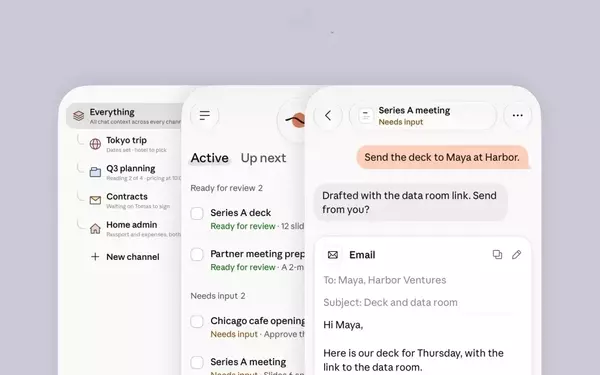
The central idea is to transform how users interact with music services. Instead of manually curating playlists, individuals could direct AI assistants to manage their musical preferences. This involves tasks such as generating music for a workout, retrieving podcasts related to recent AI discussions, or resuming an audiobook precisely where it was left off. Spotify aims to be the foundational platform that these AI agents access, enabling seamless discovery and interaction through conversational commands rather than conventional app interfaces. This strategy is already evident in Spotify's integrations with Meta's Muse assistant, ChatGPT, and Claude, demonstrating an proactive embrace of agent-driven consumption. The market has already seen instances of friction, such as Amazon blocking Meta's Muse from its shopping platform, highlighting potential conflicts over access and commercial control. However, Spotify actively participates in the growth of AI agents, rather than resisting it.
Spotify's vision extends beyond mere convenience; it focuses on deeply personalized entertainment. Söderström describes Spotify as an advanced media service, functioning as an agent itself, accessible either directly through its application or via other AI interfaces. This capability allows users to engage with Spotify through dialogue, asking questions and issuing instructions. For instance, a user could request Spotify to analyze their entire listening history since 2008, identify their favorite tracks, adjust their tempo, organize them by key and BPM, and then blend them into an ideal running playlist perfectly synchronized with their stride. The platform's vast repository of listening data, including preferred artists, skipped tracks, and discovered music, allows for highly customized recommendations that surpass the generic offerings of AI assistants unfamiliar with individual tastes. Crucially, Spotify maintains that it does not share user listening data with partners; rather, agents convey requests to Spotify, which then utilizes its proprietary systems to interpret and fulfill these musical choices, safeguarding user privacy while delivering personalized experiences.
By proactively integrating with AI agents and prioritizing personalized experiences, Spotify is shaping the future of music streaming. This forward-thinking approach not only enhances user interaction but also ensures the company remains a leader in a rapidly evolving technological landscape, benefiting from advancements that might challenge less adaptive services.