Navigating Market Volatility with Strategic Investment Choices
Understanding Market Dynamics and Investor Focus
Amid volatile market conditions, investors are increasingly focused on the income generated from their investments rather than short-term price fluctuations. Steve Laipply emphasized that in times of uncertainty, the emphasis should be on the coupons being clipped. This approach ensures that investors remain grounded in the fundamentals of fixed-income investing, focusing on steady returns rather than reacting to daily market swings. The expectation of continued volatility has been a key theme in recent discussions, with many experts anticipating further interest rate adjustments from the Federal Reserve.
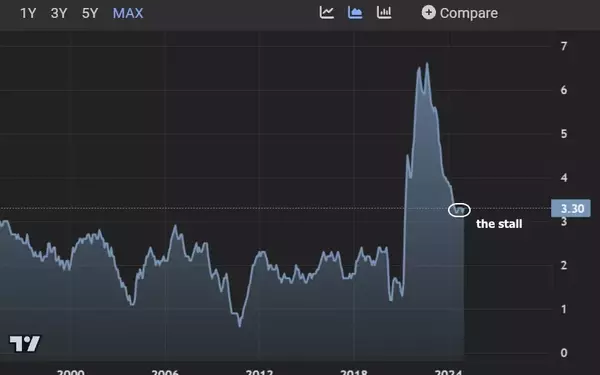
The impact of rising yields on the bond market cannot be overstated. As yields increase, the value of existing bonds tends to decrease, creating challenges for investors who are not prepared for such shifts. However, by adopting a long-term perspective and prioritizing coupon payments, investors can mitigate some of the risks associated with market volatility. Laipply pointed out that this strategy is particularly relevant given the current economic environment, where inflationary pressures and central bank policies play a significant role in shaping market outcomes.
Exploring ETF Options for Diversification and Risk Management
To help investors navigate these challenges, Laipply highlighted several exchange-traded funds (ETFs) that offer diverse investment opportunities. Among these are the iShares Flexible Income Active Fund (BINC), which provides exposure to a range of fixed-income securities while actively managing risk. Another noteworthy option is the BBB-B CLO Active Fund (BCLO), designed to capitalize on the credit opportunities within collateralized loan obligations. Lastly, the AAA CLO Active Fund (CLOA) offers investors access to higher-rated CLOs, providing a balance between yield and safety.
Each of these ETFs serves a distinct purpose in an investor’s portfolio. For instance, the BINC fund allows investors to benefit from active management, which can be crucial in volatile markets. The BCLO fund targets mid-tier credit ratings, offering a blend of yield potential and risk mitigation. Meanwhile, the CLOA fund focuses on top-tier CLOs, appealing to those seeking a more conservative approach. By incorporating these ETFs into their portfolios, investors can achieve greater diversification and better manage their exposure to market risks.
Anticipating Future Market Movements and Policy Changes
As investors look ahead, it is essential to consider the potential implications of future market movements and policy changes. The Federal Reserve’s decisions regarding interest rates will undoubtedly have a profound impact on the bond market. Laipply noted that while the market is currently pricing in a rate cut, this expectation could shift based on evolving economic conditions. Investors must remain vigilant and adaptable, ready to adjust their strategies as new information becomes available.
The interplay between inflation, interest rates, and bond yields creates a complex landscape for fixed-income investors. Understanding these dynamics is crucial for making informed decisions. For example, if inflation remains elevated, the Fed may opt to keep rates higher for longer, which would influence bond prices and yields. Conversely, if inflation starts to cool, the Fed might become more accommodative, potentially leading to lower yields. In either scenario, having a well-diversified portfolio that includes a mix of ETFs can provide a buffer against market volatility.