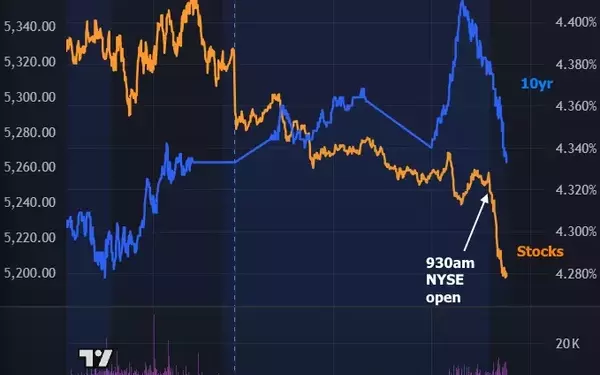
Despite widespread selling across most asset classes due to concerns over U.S. tariffs and recession risks, short-term government bond funds have witnessed significant inflows this month. While treasury yields increased as bonds were sold off, short-term bonds experienced a rally post-initial selloff, highlighting their safety and liquidity. Data from LSEG Lipper indicates that these funds received $18.1 billion in inflows so far this month, potentially marking the highest inflows in two-and-a-half years if sustained. Conversely, overall U.S. bond market funds saw outflows of $47.7 billion during the same period. Retail investors and wealth managers are prioritizing income and capital preservation, leading to higher inflows into short-term government bond funds.
Analysts predict that ongoing uncertainty regarding tariffs and Federal Reserve rate cuts will increase bond volatility, driving fund flows away from riskier segments like high-yield bonds and private credit towards safer options such as short-term government bonds. Investors anticipate that once market stability returns, being invested in short-term bonds will allow them to swiftly reallocate funds into riskier assets to capitalize on potential gains.
Rising Popularity of Short-Term Bonds Among Investors
Short-term U.S. government bond funds have become increasingly attractive to investors seeking both income and capital preservation amidst economic uncertainties. These funds offer a secure alternative compared to longer-term bonds, which have seen declines due to rising yields and tariff-related concerns. The Vanguard Short-Term Treasury Index Fund has shown resilience, with a slight increase this month, contrasting sharply with the 3.45% drop in the Vanguard Long-Term Treasury Index Fund. This trend underscores investor preference for reduced duration risk when yields on short-term instruments approach those of long-term counterparts.
Investor sentiment is shifting as many question the necessity of assuming additional duration risk for marginal yield benefits. Financial advisory firms report heightened interest from retail investors and wealth managers who prioritize safeguarding capital while earning modest returns. Steven Roge, a prominent investment officer, noted that under current market conditions, opting for short-term bonds aligns with strategies focused on minimizing risk exposure. Leading this influx are specific exchange-traded funds (ETFs), including the SPDR Bloomberg 1-3 Month T-Bill ETF, iShares 0-3 Month Treasury Bond ETF, and iShares Short Treasury Bond ETF, collectively attracting billions in new investments.
Market Dynamics Shaping Investment Strategies
As uncertainties surrounding tariffs and Federal Reserve actions persist, analysts foresee heightened bond market volatility influencing investment patterns. Riskier asset classes such as high-yield bonds and private credit may experience reduced inflows as investors seek safer alternatives. Brian Huckstep, an influential investment manager, emphasized that each development increasing the likelihood of significant tariffs correlates directly with elevated recession fears, prompting increased allocation toward short-term government bonds perceived as relatively secure. This shift reflects broader strategic adjustments aimed at preserving capital while awaiting clearer market signals.
Moreover, experts suggest that maintaining positions in short-term bonds equips investors to pivot rapidly into more aggressive opportunities once stability re-emerges. Such flexibility enables participation in potential rallies without enduring prolonged exposure to volatile markets. Consequently, substantial inflows into select ETFs underscore growing confidence in short-term government bonds as prudent investment vehicles during turbulent times. Investors recognize these instruments' ability to balance modest returns with enhanced protection against unpredictable economic fluctuations, making them indispensable components of diversified portfolios tailored for today's challenging financial landscape.