A recent assessment by the reinsurer Swiss Re indicates that if a hurricane similar to Katrina were to strike the United States today, its insured costs could approach $100 billion. This estimate takes into account current exposure values and existing protective infrastructure. The original Hurricane Katrina in 2005 stands as the most expensive natural disaster in recent American history, incurring an economic toll estimated at over $225 billion in today's currency. This highlights the enduring financial vulnerability to such catastrophic weather events, despite advancements in resilience and preparedness.
Swiss Re's comprehensive report delves into the potential consequences of a Katrina-level event on the contemporary U.S. landscape, particularly focusing on the New Orleans area. The analysis reveals a nuanced picture: while certain factors, like enhanced flood defenses and stricter building codes implemented post-2005, would likely reduce physical destruction, other elements contribute to the substantial financial projection. The cost of construction, housing, and repairs has surged since 2005, outpacing general consumer price inflation. Moreover, the long-term demographic and economic shifts in New Orleans, including a noticeable population decrease, also play a role in the revised loss potential.
In 2005, private insurers bore approximately $66 billion of the losses from Katrina, alongside an additional $13 billion from oil rig claims, both figures adjusted to 2024 values. The U.S. Federal Emergency Management Agency's (FEMA) National Flood Insurance Program (NFIP) also disbursed a record $26 billion in flood insurance claims. This immense payout represented a significant portion of the U.S. property and casualty insurance industry's capital at the time, underscoring the unprecedented scale of the disaster, largely exacerbated by the catastrophic failure of New Orleans' levee systems.
The devastating impact of Hurricane Katrina extended beyond immediate financial losses. The displacement of 1.5 million people led to a substantial and lasting reduction in New Orleans' population, with many evacuees never returning. Consequently, the economic output of the region also diminished. This scenario vividly illustrated the consequences of low resilience and a significant 'protection gap,' where a large portion of economic losses remained uninsured, hindering the region's full recovery.
Crucially, the reinsurer emphasizes that the U.S. federal and state governments invested $14.6 billion in rebuilding and enhancing New Orleans' flood defense infrastructure after Katrina, including new levees, gates, pumps, and floodwalls. Additionally, Louisiana adopted its first statewide building codes, based on 2006 IBC and IRC standards, specifically to mitigate wind damage. These adaptive measures have significantly boosted the region's capacity to withstand future storms.
The experience of Hurricane Katrina fundamentally altered the insurance and reinsurance sectors' approach to risk. It demonstrated the industry's ability to absorb massive losses while also highlighting the dynamic nature of risks. The concept of 'super cat' effects—unanticipated factors that escalate losses, such as the levee failures in Katrina—became central to catastrophe underwriting, risk management, and capital management. These effects are now routinely integrated into disaster risk modeling, reflecting a heightened awareness of complex and interconnected loss drivers. Furthermore, policy wording improvements were made to clarify distinctions between wind and water damage, addressing extensive litigation that arose post-Katrina regarding claim causality.
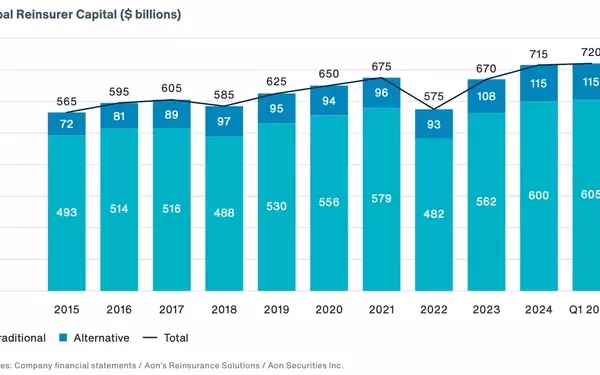
Tropical cyclones, particularly major hurricanes in the North Atlantic, continue to pose a substantial risk to both the U.S. and global insurance industries, accounting for a significant portion of insured losses over recent decades. The fact that New Orleans is projected to experience less severe damage from a hypothetical repeat of Hurricane Katrina today attests to the efficacy of proactive preventive and adaptive measures. Nonetheless, a recurrence of such a powerful storm would still result in substantial financial burdens for the reinsurance industry and insurance-linked securities (ILS) funds, with catastrophe bonds also facing potential payouts to aid recovery efforts, demonstrating the interconnectedness of global capital markets in disaster resilience.