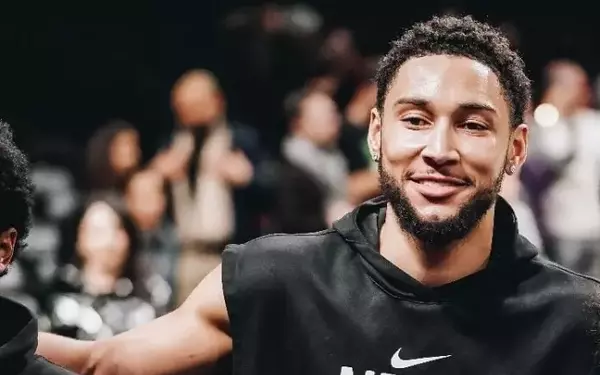
The professional basketball landscape is abuzz with uncertainty surrounding the future of Ben Simmons, a once-promising NBA talent. Recent developments, including the formal separation from his long-standing agent, have fueled widespread speculation about whether the athlete will continue his career. Despite lingering interest from certain franchises, the prospect of retirement seems to weigh heavily on Simmons' mind, marking a pivotal moment in his journey. His trajectory from a celebrated rookie to a player facing such fundamental career decisions highlights the demanding nature of professional sports.
Simmons' Career at a Crossroads Following Agent's Departure
In a significant turn of events on September 4, 2025, NBA insider Marc Stein revealed that Bernie Lee, Ben Simmons' long-term representative, officially notified the NBPA of his withdrawal as Simmons' agent. This decision by Lee coincides with growing discussions about Simmons' potential retirement from the NBA, casting a shadow over his future in the league. Stefan Bondy of the New York Post earlier this week reported on the New York Knicks' interest in Simmons, along with another unnamed team, for a crucial roster spot. The Knicks are reportedly assessing Simmons for his defensive capabilities and playmaking prowess, considering him as a backup guard. Simultaneously, they are also evaluating Landry Shamet, whose shooting skills present a different strategic option for the team.
Now 29 years old, Simmons has witnessed a dramatic decline from his earlier career highlights. Drafted as the No. 1 pick in 2016, he quickly rose to prominence, securing Rookie of the Year honors in 2018, earning three consecutive All-Star selections, and twice making the All-Defensive First Team while with the Philadelphia 76ers. However, his performance has since dwindled, largely attributed to persistent injuries and a reduced offensive presence. During the most recent season, splitting his time between the Brooklyn Nets and the Los Angeles Clippers, Simmons averaged 5.1 points, 4.9 rebounds, and 5.6 assists over 50 games. His playoff contributions for the Clippers were minimal, with an average of just eight minutes per game during their brief postseason run. Despite these challenges, his career averages of 13.1 points, 7.4 rebounds, and 7.2 assists across 383 games underscore the significant talent that once positioned him as a cornerstone player. Despite his recent struggles, the unique blend of his physical stature, defensive versatility, and ability to facilitate plays for his teammates continues to pique the interest of franchises. Nevertheless, sources close to the situation, as reported by the Post, indicate that Simmons, who has amassed over $200 million in career earnings, is genuinely contemplating whether to endure the rigors of another demanding NBA season.
From a journalist's perspective, this unfolding narrative is a poignant reminder of the volatile nature of professional sports careers. Ben Simmons' journey, from the pinnacle of early success to grappling with potential retirement at a relatively young age, illustrates the immense physical and mental toll the NBA can exact. It compels us to consider the broader implications for athletes facing similar crossroads, where past achievements clash with present challenges and future uncertainties. The saga of Simmons also highlights the intricate dance between player, agent, and team, where professional and personal aspirations often intersect with the cold realities of performance, health, and market demand. It makes one ponder the kind of support systems and mental resilience required to navigate such complex career transitions in the high-stakes world of professional basketball.