In the intricate financial landscape of the National Basketball Association, the trade exception stands out as a powerful yet frequently misinterpreted instrument. This mechanism provides teams with the critical flexibility to acquire athletes even when they cannot offer an equivalent salary in return. Essentially, it allows a franchise to absorb a player's contract, thereby adding talent without disrupting their existing payroll structure or incurring immediate luxury tax penalties. This strategic tool is born out of specific trade scenarios, offering a window of opportunity for teams to bolster their rosters and remain competitive over time, showcasing the nuanced approach required for effective roster management in professional basketball.
A trade exception comes into existence when a team parts ways with a player but opts not to receive an equivalent salary back in the transaction. The financial value of this exception is directly tied to the outgoing player's salary, though it may be marginally lower depending on the specific terms of the agreement. Once created, this valuable asset remains active for a period of one year, granting the front office a generous timeframe to identify and pursue suitable player additions. It's important to note that teams cannot combine multiple exceptions, nor can they aggregate several small exceptions into a larger one. However, a single exception can be used to acquire one player or be strategically divided to absorb the contracts of multiple players in separate deals.
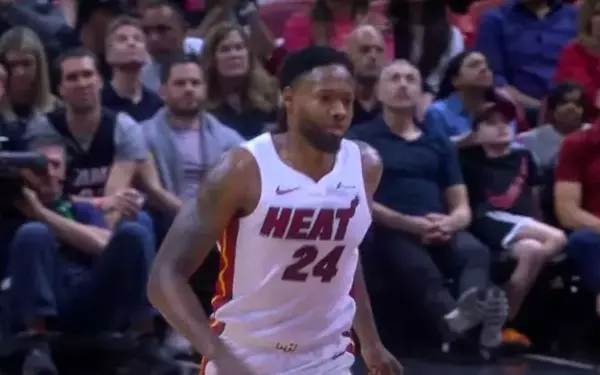
A notable instance of this mechanism in action occurred in 2020, involving the Boston Celtics. Following the departure of Gordon Hayward to the Charlotte Hornets in a sign-and-trade deal, the Celtics successfully generated an unprecedented $28.5 million trade exception. This figure represented the largest exception in league history at the time and proved instrumental in their future roster moves, specifically facilitating the acquisition of Evan Fournier from the Orlando Magic. More recently, the Miami Heat utilized a similar strategy earlier this month, creating a $5.6 million trade exception through the transfer of Haywood Highsmith to the Brooklyn Nets. This maneuver not only provided financial relief by helping the Heat stay below the luxury tax threshold but also equipped them with the means to potentially add another rotational player later in the season.
Teams frequently leverage these exceptions with foresight, often holding onto them until opportunities arise, particularly around the mid-season mark or closer to the trade deadline. Given their 12-month validity, these exceptions can even carry over into the subsequent offseason, extending their strategic utility and providing sustained flexibility. Another prominent example dates back to 2022, when the Golden State Warriors acquired a $17.2 million trade exception after sending Andre Iguodala to the Memphis Grizzlies. This exception became a key component in the Warriors' ongoing efforts to manage their luxury tax obligations and refine their roster, supporting their core trio of Stephen Curry, Klay Thompson, and Draymond Green.
While trade exceptions themselves are not transferable assets, their significance in salary cap management is undeniable. They serve as a crucial lifeline for front offices aiming to maintain a competitive edge, especially when salary space is at a premium. By providing a pathway to integrate new talent without necessitating a complete overhaul of the existing roster, trade exceptions underscore the dynamic and often intricate methods employed by NBA teams to build and sustain successful franchises within the constraints of the league's financial regulations.