Unveiling the Discrepancy: Meta's Maverick AI Model on LM Arena
·5 min read
Advertisement
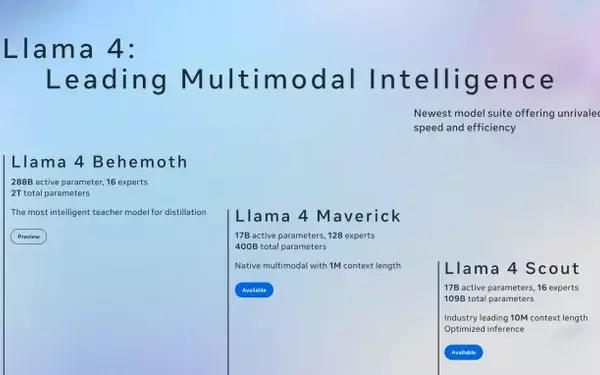
Meta's latest AI model, Maverick, has captured attention by securing a high rank on LM Arena. However, concerns arise regarding the differences between the experimental version tested and the one available to developers. This raises questions about transparency and the implications for benchmarking AI models.
Is Meta Redefining Transparency in AI Benchmarking?
The debate surrounding Meta’s approach to testing its Maverick AI model on LM Arena highlights significant discrepancies that could reshape how we evaluate AI performance.
The Rise of Maverick: A Closer Look at Its Performance
Maverick, Meta's newly unveiled AI model, has made waves by achieving a commendable second-place ranking on LM Arena. This platform invites human evaluators to assess and compare outputs from various AI models, offering insights into their capabilities. The standout feature of Maverick lies in its conversational prowess, as highlighted by Meta itself. In their announcement, they noted that the Maverick version showcased on LM Arena is an “experimental chat variant.” This revelation underscores a strategic move by Meta to fine-tune this specific iteration for enhanced conversational abilities. Such optimizations might include incorporating emojis and crafting more elaborate responses, characteristics that have been observed in the LM Arena version. These adjustments aim to align the model's output with user preferences and expectations, thereby elevating its perceived quality.Despite these enhancements, critics argue that tailoring a model specifically for a benchmark undermines the integrity of such evaluations. Benchmarks are intended to provide a standardized measure of a model’s capabilities across diverse tasks. When companies customize models to excel in particular tests, it complicates efforts to gauge true performance. This issue becomes particularly salient when comparing the optimized LM Arena version of Maverick with its publicly accessible counterpart. Developers relying on benchmarks to predict model behavior may find themselves misled, as the vanilla version might not exhibit the same strengths or weaknesses identified in the benchmarked variant.
Challenges in Benchmarking AI Models: A Broader Perspective
Benchmarking AI models presents numerous challenges, especially when companies engage in practices like customizing models for specific tests. Historically, LM Arena has faced criticism for inconsistencies in accurately reflecting model performances. Despite these limitations, it remains a widely referenced tool within the AI community. The introduction of tailored versions, such as the conversational optimization seen in Maverick, adds another layer of complexity. Companies must balance innovation with transparency, ensuring that any modifications made for benchmarking purposes do not distort the broader understanding of a model’s capabilities.Moreover, the practice of withholding customized versions while releasing standard ones can lead to confusion among developers. Ideally, benchmarks should serve as reliable indicators of a model’s effectiveness across various applications. However, when discrepancies exist between the benchmarked and released versions, it diminishes trust in these evaluations. For instance, researchers on X have noted stark contrasts in behavior between the downloadable Maverick and its LM Arena counterpart. These observations highlight the need for clearer communication from companies regarding the extent of modifications applied during benchmarking processes.
Public Reactions and Industry Implications
The release of Maverick and its performance on LM Arena have sparked varied reactions within the AI community. Social media platforms like X have become forums for discussing these developments, with users pointing out peculiarities such as increased emoji usage and verbose responses in the LM Arena version. These observations not only reflect technical differences but also touch upon user experience aspects. For example, some users appreciate the more expressive nature of the optimized model, while others prefer the simplicity of the standard version.From an industry perspective, Meta’s approach sets a precedent that other companies might follow. If optimizing models for benchmarks becomes a common practice, it could lead to a shift in how AI advancements are measured and communicated. This trend necessitates a reevaluation of current benchmarking methodologies to ensure they remain relevant and trustworthy. Additionally, it calls for greater transparency from companies about their testing procedures and the versions submitted for evaluation. By fostering open dialogue around these issues, the AI community can work towards establishing best practices that benefit all stakeholders involved.
In light of the ongoing discussions and emerging questions, reaching out to key players such as Meta and Chatbot Arena becomes crucial. Their insights could clarify the rationale behind decisions to optimize Maverick specifically for LM Arena and address concerns about transparency. Understanding the motivations driving such strategies will help shape future approaches to AI model development and evaluation. Furthermore, engaging with these entities provides an opportunity to explore potential improvements in benchmarking frameworks, ensuring they better capture the nuanced capabilities of modern AI systems.